There was a terrible movie a few years ago called Children of Men. It was dark and grimy and violent and has one of the top 10 most shocking movie deaths ever. In that story, all women were rendered sterile by some sort of plague, and the species was dying out. There was one woman that was still fertile, and governments were fighting over access, hoping to harvest her eggs and rebuild our species from that. Of course, everything goes wrong. It's that kind of movie. The script writers will say it was a metaphor for how govt should stay out of abortion or doom us all. But that's not quite true.
The thing is, that plot-setting was stolen from a Japanese scifi comedy called Saber Marionette J, from the 1990's. It was so popular it had three series sequels. It never gave up on the comedy either. SMJ was hilarious because it was about android wives for an unfortunate batch of space colonists who lost their colony ship in an orbital collision. Six men survived landing, so they opted to clone themselves, with differences and variations, to repopulate this otherwise habitable planet. 300 years builds an entire planet of men. Only men.
Some, of course, end up gay, but the rest buy advanced androids shaped like women, called Marionettes. Most are merely programs. Subservient women shaped robots that serve the food and clean the house and only do what they are told. They aren't as fun as a real woman would be. They don't have moods or emotions. But a few do. Very few have actual awareness, emotions, personality, ambitions. They are still androids but they are also alive, emotionally speaking. This is quite exotic for a world where such things are lost to time.
Leftover ship technology turns up in interesting places, like abandoned building basements. Since everyone is cloned, genetic locks open for any clones too, so doors have a 1:6 chance to open, computers to activate, stuff to turn ON accidentally. It makes for more comedy. Not like bombing a coffee shop full of people weeping like in Children of Men. What a depressing failure that was. And it's NOT original. It's a second rate Emo copy of SMJ, without even the benefit of cloning to solve their problem. They went for cheap violence: bombs and guns. Sigh.
Keep in mind that SMJ spawned their own fan works, which became manga and then anime of their own. Vandread was about the War of the Sexes going into space, and cloning allows the survivors not to marry, not to require men or women to reproduce. They tell nasty stories about the wars with the other gender, complete with space battles and mecha to kill each other. Vandread has lots of comedy, but eventually goes to a dark place. Few manga authors know anything but drawing, so they aren't up on gene cloning or stem cells or how those work. If you can go to space, you can clone organs. You don't need to harvest them. That's really a popular myth in the face of modern science. There's even a nasty bit of RNA lurking in our genome which can activate some rather terrifying feral monster parts of our DNA, stuff that makes us heal much faster and become hyper aggressive, like the Reavers in Firefly. There's also an RNA strand that makes us largely immune to radiation damage, but precisely what sequence this is is protected by govt. After all, someone with that could build a nuke or dirty bomb and probably not die from handling the isotopes. But that's very cutting edge. It isn't in anime. After all, if there were women on the shuttles, even if they didn't live, you can still clone from tissue samples. Even hair or fingernails.
Work is being done to clone mammoths from hair and ivory. Both contain sufficient DNA to build the entire animal. Not that they should, but they are doing it anyway. Maybe they'll get around to Mastodons and Hippos and Giant Ground Sloths too. Meh. Those suckers were huge. I haven't seen any anime or scifi depicting those yet. Not realistically anyway. Right now they're competition for resources. Maybe in the future, a wetter future with more plants and fewer deserts, we can have those running loose again. I bet Auroch bulls would really cut down the arab nonsense. A bull 20 feet long and 9 feet at the shoulder with 16 foot wide horns, which can run 45 mph and has a hoof as wide as your head? Sure, that sounds dangerous enough to prove a challenge. Set them loose. They'd probably tear apart the adobe cities and trample jeeps and cars underfoot. These things existed until about 9000 years ago, all across the Sahara and Egypt and Arabia and Persia. Picture that.
And keep in mind that bulls, in the forest in Europe, used to be the #1 killer of people 2500 years ago. These were little ones, barely larger than modern. They were poodle-vicious though. Attack anything that moves, like your little sister or your mom picking berries. They don't care. European men got very angry and developed the techniques to kill them. The Spaniards still use them in bull fighting. The Ring is the size and shape of a typical forest meadow. I appreciate their efforts. They are trying to breed back this fierceness, because life isn't safe. Safety is an illusion.
DNA cloning needs to be a more common thing in scifi because it is happening in the real world. It was abused by Hollywood crap-movies, with various mutants and mad scientists. Endless retellings of Frankenstein's monster, a bit of necromancy rather than science. Thank girly sleepovers for that one. It is now cliché, but it is happening. It needs to be treated honestly, like computers. Its not hand waving territory anymore. People actually know how it works.
During the course of research into scooters and motorcycles, I made an optimized discovery. In the old days, about 50 years ago, motorcycles with 250 cc engines were considered economy, and 500 cc was powerful. Anything bigger than 500cc was "compensating for something", usually a certain lack of filler in the trousers. Nowadays 1300cc is considered adequate, and you can buy a 2.3 liter engine for a bike, which is definitely compensating for something. Really Big Harleys are an obvious p3N15 extension device, and most women sigh in disgust at the unsubtle whining and noise of men who have failed in the most important way.
1300 ccs, the size of an original VW bug engine.
While it is true that race bikes ridden by fearless experts can make use of really powerful 50, 75, and 100 HP motorcycles, what you actually need for non-freeway riding is 32 horsepower. You can easily get this from a 400cc engine, air cooled. This is what I learned.
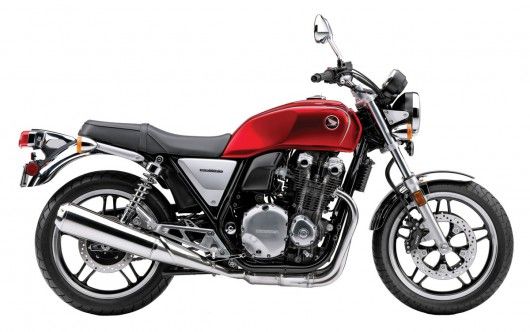
I later learned you can detune a 650 down to this, or pressurize a 250cc to get that output using the more expensive gasoline. Or you can just buy any 500cc, such as the current Honda CBR-500, which won awards for fun and economy, having just the right balance of weight, power, and fuel economy for general use. Unfortunately, the bike doesn't have a vintage model, like the 1300cc which looks like Honda's 1970's UJM and thinks to go up against Harley Davidson, which has a huge customer base that's fanatically loyal. A pity, since that look remains in style and would hold value better than plastic fairings and that really ugly tailpipe. I do hope the person who decided to do that was told to commit seppuku. It has cost the company a lot of sales. Ugh. You would think, with the internet being everywhere, someone at Honda would have noticed the popularity of classic tailpipes, and noticed the prices those were getting at sale. It is a serious DUH! moment, right there. Sigh.
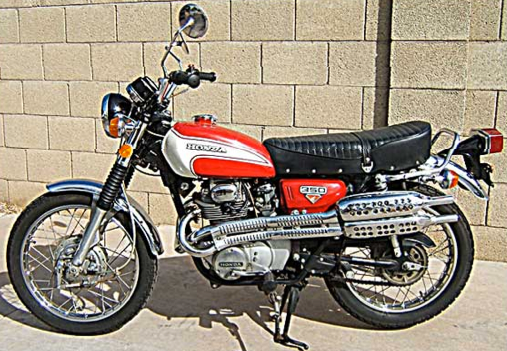
At this point, even re-releasing the CB350 and CB360 and CL360 would sell. They are classics. Not very powerful, but with 25 HP they are good enough and would be everywhere if they were the same price as the new Ugly CBR-250. Honda, once again failing to understand their market. The CB360 has low chrome pipes, appropriate engine size, appropriate upright UJM sitting position and pegs situated to allow the rider to stand for rough roads (which we have), something you cannot do with a forward foot-peg cruiser, and their worst failing. Harleys are too low to work on bumpy roads, and can't lean over without grinding them off. As the pegs are cast, rather than cut, and made in China, the steel and heat treating tends to allow them to break off sometimes. This makes for interesting ride stories, though few Harley riders post stories in places I read. ADV is all about the dirt roads and exploration, even if most of the places they explore are Nevada and the Pan American Highway down to Chile and back. Africa is too violent, Asia too ugly. Europe has its own problems and too many borders. Really, America is the best place for motorcycle exploration, both Americas (North and South).
The thing about a modest amount of power on a motorcycle is climbing a mountainside at freeway speed on superslab interstate isn't as much fun as puttering along at 40 mph and looking at the view with a big smile. In the Sierras, there are some longer sections where you have to go faster than 50 or literally be run over. So you need a bike than can sprint those till you get onto the slower secondary roads again. What with rain-grooving cut into most of Interstate 80, a bike might not have very good sideways grip through the fast and steep parts of the freeway. I would find slipping sideways off a road to be quite terrifying right before that sudden and very final stop into a tree or rock face. It sucks that Highway 40 was largely sacrificed for I-80, and frontage road has not replaced it to allow a road for bicycles, scooters, and slower moving traffic to use instead. There are many sections where 40 remains in use, offset from 80. However there are critical sections where it is gone, paved over and replaced with the screaming big rigs nailing their engine brakes and maniacs returning from Reno casinos broke and angry, weaving through traffic and heading for a date with a CHP and a couple points off their license. In this, a motorcyclist must survive sprints of speed. Thankfully, using alt roads like Highway 20 gets you away from the worst of it, and 20 is curvy and smoother than 80, though its got some serious hills to climb and descend. Good brakes are a good idea, and better be able to maintain 55 mph up those climbs. Upside is there's lots of places to stop and look at the view, which is fantastic. Scenic By-ways are great like that.
So why doesn't the motorcycle industry make a 400cc engine? (They sort of do but they charge 650cc prices rather than 250cc prices. This needs to be fixed.) They make excuses about sleeving down a 650cc, making it heavier and harder to cool, and only valuable in Canada, where there is a special tax and insurance rate break for that displacement limit. Yet, it is powerful enough to get you to 100 mph on the straight.
500cc motors are limited but available. Harley Davidson is starting to build a 500cc V-twin for starter bikes. Originally, they announced this bike for India, which caused confusion as to whether this bike would be an import from famously inferior Indian manufacturing, thanks to decades of 350cc Enfield Motorcycle stories. The bike whose parts have to be fitted, new, because the parts are made on worn, unmaintained, machining equipment bought wholesale from England decades ago. Why aren't these equipment properly maintained so the parts are cut the right size? Because the Indian people are just that indifferent to quality. And we want to do business with that country? Why? It baffles me. We are better off dealing with more local nations, like in Central and South America. Brazil builds YZ-125 2-stroke motorcycles since before their currency collapse in 1978. Everybody in Central and South America bought them so they are everywhere. They are the right bike for exploring and repair, provided you can do the key 2-stroke repairs, like replacing reed valves and rings and soaking off the burnt on oil residue.
My thought is this: why not scale down a 650cc block to 400cc, use the appropriate sized pistons and rings etc, and then tweak THAT size for power via compression, stroke, and RPM for your intended purpose? Considering asphalt roads are going to be history, like sub-Dollar/gallon gasoline, we need vehicles well suited to the repeated bumps and lower speeds of concrete slab pavement. A 400cc is fast enough. Those bigger 650cc motors are not useless, btw. Not at all. They're going to be great in kit cars, powering modern Fiat 500 equivalents. Maybe we can call them Chrysler 650's? After all, Fiat bought Chrysler when they were sold from Mercedes for drastically underperforming in all markets. We don't have a Big 3 anymore. We have a big 2. Ford and GM, and both are having so many recalls for safety I am glad I don't own their stocks. At least, I hope I don't.
32 HP is how much old English and Italian 1960's convertibles ran. They were deadly slow, but roads were crap and their economy was 60 mpg. No exotic materials. They weren't very safe in a crash, but 60 mpg.
Considering the new Elio Motors is essentially the English Triumph Triple motor that got water cooled and made into the Geo Metro and Suzuki Swift engines, and the whole car goes for $6800 new, that's actually a reasonable price for the utility, with 84 mpg. And a roof. And a door lock. And ABS brakes. I doubt it has Air Conditioning, but I can live with that in exchange for that roof and wiper for rainy day driving. And they are cheap, so you aren't a snob if you own one. Not like say, a Tesla S at $65K. Or even a Smart Car, which is $18K out the door. The Elio is less than half that.
I kinda hope that Confederate Cycles continues their post-Katrina rebuilding and recovers their 375-Triple patent and starts making that for $5-6K. That engine has a lot of potential for a bike or an ultralight car. I also hope that Cleveland Cycle Werks continues their development of their own engine and would consider upgrading to 400cc on their existing setup. That is the one-size-fits-all for bike engines. Even in a single, if it is counterbalanced, it would allow owners to just ride and not yearn for more power. We understand Tim the Toolman Taylor was making a point about snobbery in his famous redneck punchline: "More Power!" It was his equivalent of "Hold my beer" or "Hey Bubba! Watch this!" Those two phrases have lead to more emergency room visits in America than any others. And yes, Rednecks really do say that. Its like the Injury/Death Flag warning. "We should split up to search this creepy old house. I'm sure nothing will happen."
So yeah, I'm interested in this ideal bike engine size, and I'm interested in the Elio motors trike. I think it has long term value, provided it can be repaired easily enough. And I really do think, that in modern America with CNC and all those out of work automotive engineers forcibly retired from Detroit's plants, somebody should be working on this. Because it is sensible and needs to happen.
My mother, when I was only 4 years old and starting to notice how things are cooked, owned a set of nesting cast iron frying pans. These pan, individually were the heaviest things we owned that didn't come with their own wheels or table legs. They took a while to get hot, and required a tablespoon of oil for proper operation frying something, but once hot they would do a great job putting a sear onto some piece of meat or brown a vegetable. I became a huge fan, and spent a lot of time experimenting, as I aged and took advantage of that scientific mind which I now understand is considered borderline Aspberger's Syndrome. Ever seen Salmon Fishing In The Yemen?
To me? He seems completely normal. He says he has Aspbergers, but if that's normal to me, that probably means I have it too. This does, however, make me a better chef, thus the name of the blog. I care enough to notice the outcome and improve the recipe and method.
When cooking with cast iron, there are all sorts of ways to improve. Our smallest pan, an 8-inch fryer, meant that if you cooked cornbread it would come out taller than the 9-inch, which also meant you needed to bake it longer than the usual 25 minutes at 425'F. At least, you would think so. It would burn the top a slightly darker brown if you did, so to make sure it was done and yet not burned, it was a good idea to lower the temp to 400'F, or 410'F if you had a finer-tuned oven temp. Ironically, this didn't seem to need longer cooking time, and it still rose really well, despite baking powder being temp activated. The steam was hot enough, apparently. I would test with a toothpick, and serve immediately. Within minutes the egg protein would harden and don't even THINK of microwaving cornbread. The egg proteins would harden in 12 seconds and make the cornbread resemble chunks of sand, completely inedible. So eat it fresh or eat it cold, but don't ever reheat with a microwave. I learned this the hard way. Why use the cast iron pan to bake a cornbread? Well, if you coat the pan in excess corn oil, then pour the batter into the hot oil it makes a delicious crispy crust, which drastically improves the flavor. This is key to a good cornbread. If you don't do this, it is going to taste bland and slightly nasty.
Cornbread Recipe:
1 cup corn meal
1 cup all-purpose wheat flour
1/4 cup sugar
1 egg
1/3 cup corn oil (canola also works, but
NO olive oil and no soybean/vegetable oil)
1 tablespoon baking POWDER (not baking soda)
1 teaspoon salt
Preheat 8 inch diameter cast iron frying pan in oven at 410'F with 2 Tablespoons of corn oil.
Mix dry ingredient. Add wet ingredients, stir till smooth batter.
Once pan is hot, pour in batter. It should SIZZLE. Return to oven.
Bake for 25 minutes, test with toothpick. Should come out clean.
Serve immediately with butter and honey.
In the old days an oven temp was all dials and best guess. Some ovens were 20 degrees hotter or cooler than others. You had to learn this for yourself by observation. Lots of factors for that temp difference, like insulation, age of the heating element or how clean the gas burners were. Modern ovens are much more accurate, having actual sensors and electronics rather than a bimetal strip for a thermistor/thermostat to turn the element or gas back on. Things are easier than ever, but wives are still massively lazy, and men lose interest before getting good. Its a thing. Men or women are not better at cooking by gender, though women's noses tend to be better at smelling fine details. Being a chef is all about persistence and improvement.
I started learning how to cook because I wanted to help my Mom because things in the kitchen were stressful for her, and she'd only been dealing with diabetes since she was pregnant with me. That plus her ADD made it really hard for her to stick to a project like dinner. She was dingy, her own words. My mother and brother are both ADHD/ADD sufferers, but I have super-concentration which is really the opposite of ADD. This enables me to figure things out because I observe longer and harder than everyone else. This is why I went into the sciences. I'm naturally inclined to pay attention.
This means that even when I was 4 years old, I was able to get the exact amount of spices measured with the spoons and put them into the recipe. With my sensitive 4-year-old tongue I could taste the finished dish and whether this was a good amount for each spice. Some were really nauseating. I couldn't enjoy onions until my later teens. Before that they were a quick route to vomiting. Now I adore them. Things change. I'm not a Supertaster, and I'm allergic to raw shrimp so I can't work as a chef. Shrimp is the most commonly requested seafood item at restaurants. You either handle raw shrimp or you aren't a restaurant. Customers like them too much.
When I opted to learn how to make eggs that are cooked, not runny the way Dad does them, I had to learn that you need to get the pan heated to nearly smoking at Medium Heat on the dial, plus about 4 minutes of absorbing the heat into the cast iron. Only then, about 15 seconds before you dropped in the butter and followed with the scrambled eggs mixture (just eggs, no milk, no water), could you get them into the butter before it burned brown. And you had to be precise about the timing. In 30 seconds that butter was brown and would make the eggs taste burnt. I have since learned that if you put in olive oil FIRST, then butter, the butter burns at a much higher temp so you can thoroughly coat the pan for non-stick properties and then add the eggs, with a dash of soy sauce because it enhances the flavor and nobody complains, they just like them more. Soy sauce is magic.
I've also learned that you DO NOT put cheese on eggs until they are done cooking, because as soon as cheese goes on eggs, they stop cooking, no matter how runny they are, or how hot the pan. It is a thing. It is really annoying, and an amateur that means well can really ruin eggs this way. Sort of like cooking bacon in a pan that's too hot. Lowest heat, longer cook time, is how you get crispy bacon, which is how most people like it. Also, bacon grease is TERRIBLE for cooking eggs. The burnt portion sticks to the eggs, and the steam deglazes it, causing the eggs to get burnt meat glaze on them, making them both unsightly and taste burnt and not in a good way. Always use a fresh pan for your eggs. Bacon and eggs only go together on the serving plate.
Well meaning amateurs are great at destroying previously edible food. They are stunning, how they destroy ingredients through assumptions, indifference, and stupidity. It is as if they've never observed a parent cooking. And they probably haven't. Many don't bother to learn, they are so bad at it. Many can't boil water. Most turn the stove on too high and burn anything they put in the pan.
Actual Quote: "It says HOT, I want the food to get hot. Why is the handle melting? What is that smell? Is that burned? Does this look burned to you? Cooking sucks. Want to order some Chinese?"
That's how it goes with modern College Graduates. They really are STUPID. No observation skills at all. The right setting for cooking veggies? MEDIUM-LOW or LOW. Seriously. They don't take much effort to soften and release their flavor into the dish, which is what you want for a one-pot dish. Which is exactly what you want for distracted cooking. Slow food is better for the beginner. Fewer ways to make mistakes. Fast food is all about timing, and getting timing wrong ruins ingredients. Distraction = waste. Student cooks don't have the money to waste ingredients. They gotta eat their mistakes. I have eaten many mistakes, for many years. Enough to motivate me to learn how to improve. And I did. I can do the fast methods, I just don't want to. I get tastier results by taking my time and letting things simmer.
I can say, with some pride, that by showing my best friend That Guy(tm) and his observations of both myself, and his other best friend Radical Racer Dude(RRD)(tm) who was a professional chef (with an actual name) who cooked for money, it gave him sufficient motivation to cook for himself. That Guy(tm) is really smart. As smart as me, maybe slightly smarter. He cooks, he improves, and he's learned many techniques and dishes which satisfy while keeping his diet gluten and bean free.
The original pot roast, before the pressure cooker was invented, involved a cast iron pot, a pair of bricks, and a towel. You put the meat, veggies, bay leaf, cider vinegar, Wooster sauce, and some water in a pot in the oven or on the stove, and simmer at 300'F for 3-4 hours with the towel-wrapped bricks holding down the lid to increase the pressure inside, forcing the steam into the meat and softening chuck roast cartilage into delicious gelatin flavored with beef and vinegar. Hindus don't know what they're missing.
I see that Amazon sells the Lodge brand of cast iron. Cast iron cookware is heavy and durable. It will literally last for generations. I have some of my grandmothers cast iron. It is normally a sign that your great grandparents were pioneers, here in the West. It became popular in the new arrivals because most the local recipes for delicacies that must be presented at Church Socials required cast iron cookware to make properly. If you didn't make it properly, you get snubbed, for months or years. Because that's how church wives work. And they force their husbands to comply. Humans are a vile species, but we are what we are. In a thousand years, we might be a lot better at decency. It only took us a couple thousand years to stop nailing people to crosses for saying what a good idea it would be to be nice to each other for a change. Maybe common cooking jealousy will vanish in another thousand years?
In the meantime, if you are going to buy for your grandchildren, I recommend enamel coated cast iron. The cost is only slightly more, and the enamel doesn't come off just because you are cooking tomato sauce. You still have to take care of it, but it really will last. Just get the right stuff. With a lid. While most cooking gear is just an excuse to make a dish once or twice which you think is painful to do with existing tools, cast iron pots/pans will see use again and again. They even work on actual fires, though I usually recommend the ones with legs for that, and a rimmed lid to hold coals. Baking in a Dutch Oven using fire coals is expert level cooking, and requires a sensitive nose, which I have. And I'm damned good at it too. Biscuits, cakes, I have done those with fire coals. Add 20 minutes to times because the Dutch oven goes onto the fire cold and needs to warm up. And stay close. Stuff can still burn. You need to smell the start of that. These things are too heavy for backpacking. But they're great for car camping.
Same with African Safari hanging pots. Those cast iron pots have a bottom shaped to extract the maximum heat from open flame, like a wok with a lid. Just don't drop it in the fire, and when it boils over, the moisture falls in the fire, hissing, and sometimes burns to the bottom of the pot. Of course, like above you can seal the edges with bread dough, which raises the pressure inside and cooks the contents faster. Note the metal loop handle for hanging the pot over an open fire.
Cast iron cookware. It lasts longer than houses. Biscuits, cakes, breads, stews, roasts. These are easily accomplished in this sort of pot with a lid.
Iran has been at war with Iraq since 1980. There has been a ceasefire since the 1990's. Their troops invaded Iraq territory, which violates the ceasefire. This is an act of war. Iraq now has the right to bomb Iran. If they weren't so busy trying to kill the "Al Qaeda" revolutionaries that have seized control of most of Iraq's cities and started beheading, on video, their enemies by the dozen and eventually hundreds, Iraq would be warming up the nerve gas. This is very bad, since the main loading platform in the Persian Gulf is right offshore of Kuwait and Saudi Arabia, and far too close to Iran and Iraq, used by all of them. The result is a major stock market crash and probably a huge price surge in oil prices. Speaking of which, I had better go fill my tank now.
UPDATE: Locals hog gas station, clean windows, chat about their grandchildren, then steal the next person's spot (mine) because they are assholes. I hope their houses burn down in the fires this fall. I really do.
I don't understand the hate between bicyclists and scooterists and motorcyclists. Motorcyclists, some of them, will allow Scooterists but many are contemptuous of their slower brethren. And bicyclists are really snobby towards scooterists, which seems to be jealousy over the fact the scooterist can wear more normal clothes and not breathe hard despite going faster than the bicyclist and making a little noise. All of them are using far less gasoline than a car does, in far greener vehicles than a Prius. So why the hate?
If you are on two wheels, you are brothers. Deal with it. You are each hard to see by distracted motorists, and each have issues with motorists not sharing the road, and with other bikers/cyclists behaving badly and smearing all the well-behaved ones like you.
Just because slot riding (lane splitting) is legal doesn't mean you should do it. It startles drivers and causes accidents, ones where the cyclist gets hurt most of the time.
Finally, just because cycling is easy on the flatland doesn't mean you have the right to be disrespectful to those, like me, living in seriously steep terrain where pedaling a bike is for masochists and the suicidal. There are 500 foot hills all over these two towns. Picture climbing three of those on a single ride, then try to work at a job afterwards. Realistically, a scooter or small displacement motorcycle is a better idea and far safer on twisty mountain roads with blind turns.
Finally, I can totally see the value in bubble cars, motorcycles with a sidecar, and even the new Elio Motors trailing delta Trike. That has a future here, I am sure. I would like to see it with a taller stance, however, since the roads tend to be humped in the middle and might scrape the bottom of the car driving over them. Small wheel scooters, likewise, are a bad idea here since potholes are 3 inches deep and would throw a scooter into an uncontrolled wreck hitting one with those tiny 10 inch wheels. Since the wheel hub is only 5 inches off the pavement, a 3 inch deep pothole gets that hub town to 2 inches off the road surface when the 1.4 inch suspension is completely compressed under the bike weight just when it needs to compress upward 3 inches. That vector translates to flipping the bike over the front wheel at anything close to 30 mph or more. Or bending the front fork, something I have seen online. A bad deal. Thus the importance of good street repair and paying attention when your ride. And having at least 3 inches of suspension travel to spare. This is why so many local motorcyclists are on Enduro bikes. Those go to 11. Inches, I mean.
I suppose one of these MP3 Piaggio bikes would work, but they cost as much as the Elio motors car, so why bother?
A local natural herb alternative health operator was arrested this weekend for various felony violations of medical law. The AMA came down like a hammer, and the DA has to charge him with felonies. His business is over. Even if he manages to win the court cases the cost of his defense will bankrupt him. This is a slam against all alternative health practitioners in the area, and a warning that even suggesting non-FDA approved chemicals are medicines, in any way, could land you in actual jail, as an actual felon. Felony convictions for medical fraud are life changing. You lose the right to vote, to travel outside the country (and come back), to own a firearm, and work in various jobs. If your career is international travel, and you get a felony conviction, you lose your passport. And that's AFTER you serve your prison term.
If convicted, this guy is looking at a decade in prison, and close to a million dollars in fines. What sort of retirement lifestyle do you get after that?
I suspect every local alternative health practitioner should be looking closely at what this guy is being charged with and see if they're doing anything which could be charged too. They may find themselves under arrest if they don't clean up their acts. And there are SO MANY medical malpractice laws, including second degree murder, or the popular "practicing medicine without a license". Not a nice business to be in. I imagine those businesses are sweating today.
It is so important to be on the right side of the law.
I live in California. I grew up near the Pacific coast, in a town a bit inland. We got daily fog rolling in that chilled our evenings drastically, cutting visibility to a hundred feet. There are MANY car crashes due to fog. People who refused to adapt to fog, died. This is a big part of why I'm so grim. The coastline north of San Francisco Bay, and south of it too, is smashed by waves, and crushed by earthquakes. This makes the ground brittle and erodes away, leaving unstable cliffs that suddenly drop in storms or heavy rains. Building a home there is a big risk. Cliffs fall into the sea. Sea spray ruins windows and water rises upwards into the windward side of homes. The trees slant sideways because the winds strip branches of weak twigs. It is a harsh environment. A few miles inland, it is massively green, lush jungle of giant redwood trees, laurels, oaks, and deep canyons with winding streams. Some farms struggle in the few flat places, but you find more dairies if there's pasture. Old rotting barns with rusting corrugated iron roofs, hand painted horse back riding rental signs, fruit stands, and souvenirs. Highly photogenic.
It is a wonderful place to explore via car (girl + Miata!) or motorcycle (girl on pillion), but the distances are a little much for a bicyclist. Some cyclists do it anyway, either hardcore or overnight touring. This was more common when the state still ran cheap campgrounds with an onsite manager willing and able to call the deputies to arrest rowdy fratboy thugs. Things really took a turn for the worst when campgrounds lost their managers. They turned into drunk parking areas for the disenfranchised 80's punks. Old War Veterans were great campground managers. Friendly but firm. I miss those guys.
On the California coastline, there's nowhere to build a private dock because there are no barrier islands to absorb the incoming Pacific breakers, commonly 6 feet high and perfectly capable of ripping its anchor loose and bashing a boat to pieces on the many rocks lining the shore. Owning a boat for pleasure use means living in the few harbors: Bodega Bay, Dillon Beach Marina, Noyo Harbor, Eureka Harbor, and Crescent City (famous for tsunami strikes).
That's all there is north of the SF Bay. The rest is narrow beaches, a few coves used by smugglers during Prohibition, and the Russian River which half the time is full of sand. So living on this coast is harsh, romantic, beautiful, and no place to make a living. It is too cold and windy to grow many crops thanks to the nearly constant fog and strong north wind. Most people living at the harbor towns ran serious bad-weather fishing boats. The fish are good there, or were. Canneries in Monterey and Eureka both shut down after the numbers of fish dropped thanks to taking too many. Those will come back, given a chance. An upside of Peak Oil is the cost of diesel fuel makes aggressive trawling thousands of miles from your home port a waste of time. So the folks violating international fishing catch laws will go away. And its going to take years before the locals build sail powered fishing boats, giving the schools of fish a chance to surge between the years with super-expensive fuel and the boats getting financed, built, crews trained to work with sail and electric winches, and launched into operation. And they still require anchorage in those few safe harbors on the North Coast of California.
The Central Coast has even less harbors. Between Carmel and Morro Bay there is nothing but 1000 foot high crumbling cliffs and the most scenic Highway in the world never visited by Top Gear. It is known as Big Sur. There are mansions there, including Hearst Castle. There are fewer storms than the North Coast.
The fog was very good for grapes, which is why I lived next to a ranch that was next to a famous vineyard. The ranch was run by a drunk, who rarely did any work. Ideal conditions for trespassing into the ranch to hike. I did that frequently. Never occurred to me I was breaking the law, but the statute of limitations is long past, so I can talk about it. Kids don't understand things like insurance rates. That property was steep, wooded, full of poison oak, and climbed nearly 2000 feet. When I was a kid, I thought it was a volcano, like in Lord of the Rings. Turns out I was right, despite the hippy-dippy teacher twit in primary school who said I was wrong because she hated children. Well, she did. Some people are unsuited to education or parenting, and she was one of them. So yeah, when I got my degree, I found that not only was the hill a climbed a volcano, but it was an ultra rare mature one possessing all three kinds of magma, which is highly unusual. This made the volcano in question valuable to the local Indians because it was a source of the extremely useful rock called obsidian. Obsidian is volcanic glass, and is used to make stone tools, cutting blades in particular.
The local Indians were assholes, btw. This is not my opinion, this is what they say about each other. Having met and gone to college with one of them yes, that is true. They weren't warlike, because that would require effort. They were poisoners. They used the local acorns and buckeyes, both of which are naturally toxic like raw olives, and required lots of soaking to remove the tannins, then mashing and became their primary carbohydrates. Food illness was so common that the local Indians delight(ed) in poisoning visitors with these tanins. Never eat or drink anything they offer. It is a game to them, and they're clinical psychopaths. Greg Sarris documented his tribe in Grand Avenue, an HBO miniseries. Local indigenous food supply is also caused by geography. He is trying to improve his tribe's finances with the Graton Casino, and hopefully curb their behavior. I wish him luck.
When white people showed up, they started raising chickens, then selling the eggs to San Francisco. That first group were Jews escaped from the pogroms in Ukraine and Russia in the late 1850's. The sheds still exist in Penngrove. Another group from Switzerland built an idealized town north of Geyserville in the Alexander Valley, trying to raise crops using the water from the Russian River, flowing through the valley. It sort of worked, but it is hard to raise generations of kids to want to just barely make it when they can move to the city and be engineers instead. It is mostly a historical site now, and one of the state's oldest wineries.
About twenty miles west is the Pacific. The ocean rolls in with frequently rough seas, heavy breakers, few bays. Boats try to anchor in shallow coves if they must, but most head for San Francisco Bay, which is the safest alternative. The coast does have a few decent anchorages, though those tend to be full of sea lions and great white sharks, or uselessly shallow like Tamales Bay which is merely feet deep and goes half empty on low tide. The Longshore Drift (Alaska Current) flows down the coast from the North, along with the wind that drives it, which stirs up the bottom and gives the fish fresh nutrients via plankton feeding. This means the coast has good fishing, so restaurants serve lots of fresh fish. This is a big thing on the coast. Before Brown destroyed all the salmon off California, you used to be able to catch them just offshore and roast them on the BBQ grill. Excellent protein, went great with local IPA beer. Since hops were grown locally, because conditions were right for that crop, good beer is another local advantage. Wine, beer, excellent fish. See how it goes when you pay attention?
Also excellent sourdough bread, though that is temporarily gone thanks to cheap shipping bankrupting the bakeries. When shipping gets expensive, local bakeries will return. It is a good job for strong men who don't have much body hair. I have too much to do that. Bread dough rips out hairs. I hope that the heirs of those bakeries are keeping their starter alive, waiting for the big greedy corporations in Pleasanton to go bankrupt and drop support of cheap sourdough bread. Artisan bread is something like $5/loaf, which is a bit much for a delicacy that only keeps one day. In the old days it was $1.50/loaf. That was a good price for a nutritious bit of snack before dinner, something that goes well with the local cheeses and wine. There being ranches, there were also dairies. Closer to the sea, the fog is so thick the grass grows year round, so dairy cattle and sheep graze, leading to high milk production. Milk spoils fast, so any dairyman becomes a cheese maker for what they can't sell for a profit. Cheese is a long term investment, usually months of curing under supervision, but the result is dollars per pound rather than pennies per gallon, so the investment is often worth it. The Sonoma Cheese Factory has been on the Square for decades.
Olives also grow locally on the coast. And there's the bay laurels, commonly used for their leaves to season tomato sauce. Tomatoes grow well in the hotter areas, away from the fog. Places without summer rains. Surprise moisture splits the fruit. Seen it happen. You can still can those, if you pick them quick enough, but surprise rain tends to destroy crops.
So what can you do to further develop the North Coast? I have been thinking about this for years. So has Green Day, who is also from there like me. Most of them are from Eureka, hardest hit by Gov. Brown's attacks and the closure of the state hospitals, since San Francisco gave one-way tickets to the loonies for Eureka, dumping them there onto social services, assaulting kids, and dying in the woods of exposure. Terrible, vicious, hateful thing to do. Don't let people tell you that San Francisco is a nice place. They hate everybody but rich people.
The obvious thing is to start with the harbors. They need to be dredged out so they can hold deeper hulled vessels. Their port facilities need to be improved, possibly adding cranes able to lift shipping containers at some point in the future. The roads wash out in winter storms. Hwy 101/1 closes often. You need a sturdy alternate route, particularly since the cheap gasoline isn't cheap anymore, and the distances involved on those roads are most of a day's drive from Eureka to the closest metropolis: either Redding or Santa Rosa. By plane it is an hour. By Car or truck or bus, about 6 hours. And that's if the roads aren't closed by downed trees, rockslide, landslide, washout, down bridge, serious head on collision wreck, or flooded road. Conditions up there are PRIMITIVE. They might even justify the Enduro motorcycle, only it rains so much that's miserable.
For alternate freight transportation, the North Pacific Railroad needs to be restored to operation, complete with electrical overhead wiring to run freight and passenger rail up and down the coast. That is going to cost real money, but it needs to be done. California can't afford to waste significant real estate with sufficient water supply to allow housing. All those people in LA need to go somewhere when the aqueduct system gets diverted for Fracking. Especially since these are places without tornadoes or hurricanes, so loss of life to weather is minimal. Unlike, say, the entire Midwest and East and South. The area could potentially develop a lot of hydroelectric and farming, if the locals terrace, and are strict about erosion control so the reservoirs don't fill up.
As I have pointed out before: California is for tourism and agriculture. Both industries require maximum protection and development. Every other industry in California is either serving those two, or entirely secondary, possibly irrelevant like the "high tech" industry. Most of that is going out of state. Costs are too high here. They don't have to be, not for everything. If erosion control were actually effective, it is possible to build a huge reservoir, then run an aqueduct through a tunnel to a banana belt west of Red Bluff, currently dry desert, and open a huge territory to agriculture. Doing so would be extremely valuable long term, since the mountains above it stop rainfall. No surprise rain, 5 crops a year. Big money agriculture. And the North coast can spare that water. The Eel River is one of the highest sediment load (erosion term) rivers on the Eastern Pacific, from Alaska to the tip of Chile. So controlling erosion there will be a serious engineering challenge.
Why do it? LA has to go somewhere. So does most of the population of the Bay Area. Their water is going to be diverted to fracking for the next 50 years. The aquifers and reservoirs will be poisoned with benzene for the next 1000 years. It can't be stopped or avoided. If we try, we'll get invaded by China and suppressed while they do it anyway. They need the oil, and we're unlucky enough to be living on top of it. The solution is not live on top of it, and extract it knowing this is coming in advance. Time to invest in safer housing.
Even with the earthquakes up at the Triple Junction (Eureka), it is safer than being in the way of Chinese security teams guarding directional drilling sites. Their people have thousands of years of deliberate provincial genocide in their history, and the thousands machine gunned in Tianamen Square, and the arrests and slavery since that suggest they haven't changed their position on the value of human life. We are in their way. Best to move before they remove us.
Waiter/waitress, chef, hotelier, linguist, tour guide: these are serious careers with growth opportunities. So is vintage automotive mechanic. Vintage car rentals for your vacation up the coast? Sure. If you are rich, you don't care what gasoline costs.
Otherwise, take the ferryboat. I suspect we'll get coastal ferries again. Probably sail powered since the north wind is so reliable. Use electric winches to run the sails, run radar, tack using GPS so it still works in fog, and you're golden. Once those little ports are deepened by dredging and have dock facilities restored (they had them before, remember), that's financial value. Since the North Coast has plenty of rain water, the only part of the state that does, they are viable for long term settlement.
San Francisco which gets its water from 250 miles of aqueduct and pumps. The Bay Area doesn't get its water locally. It all comes from Tracy or Hetch Hetchy. It will take many solar panels to power the water pumps. And by many, I mean a million big panels. The maintenance on those will require a small city of workers. All of whom must be paid, fed, given medical care, schools for their kids, hospitals for their wives. This becomes a ridiculous expense. Particularly if you live in the Bay Area yet are not involved in shipping. That's sort of the primary value of the Bay, a place for ships to anchor out of those big waves and such on the coast. Realistically, the Bay Area went off the rails thanks to cheap oil pumping water. Now that oil isn't cheap anymore, the Bay Area will need to re-evaluate costs, and there's already a strong movement to keep things so expensive the poor and violent are being pushed out. The poor are retaliating by flipping over Smart Cars in SF city.
Smart cars are expensive toys only bought by snarky arrogant rich people who want to feel superior. Normal people can't afford such limited value vehicles. They are a legitimate target for outrage. Thing is, San Francisco really should JUST BE for rich people. Everybody else should leave. They have a $10/hr minimum wage, but you can't pay rent on an apartment there with that. It is still too little to live on. Only a lunatic would try. So leave the City to rot, leave the rich to pick up their own trash and sweep their own street and put out their own fires and fix their own broken water mains. Leave town. Only the port facilities really matter. San Francisco was dirty at the best of times. It is grubby and crass and falling apart. Stop pretending it matters. With the damage to the new Bay Bridge looking at years of delays to break apart the road surface and replace all the steel thanks to damage by the Chinese workers, there will be years of delays and higher taxes to pay for that boondoggle. It will be smarter to move your business out of downtown SF and go somewhere those taxes are not your problem. Really, there is little reason to run a headquarters there. And once the big companies start bailing out of SF city, more will follow. Some are already moving to Austin Texas, which has lower taxes and a smart population able to work in high tech. And they don't have a rusting bridge that needs to be rebuilt for a couple billion dollars taxes coming from your bottom line. Duh!
The entire reason for having companies in city of San Francisco was bragging rights and access to smarter workforce. That workforce is a myth. Bay Area workers are just as dumb and lazy as everywhere else. And you can only brag about your company profits, so moving to wherever those are highest is best. Even if that means Omaha Nebraska or St. Louis or Toronto. Just, not San Francisco because the city is populated by conceited retards who are always wrong and throw away money. The Bridge debacle is a case in point. Its three times as expensive as it should have been, delayed 10 years by arguing, and now needs another two billion to repair. And it will still fall down in an earthquake, something we're overdue for and get reasonably often. So odds are this is wasted money in the first place. Do you want to pay for that? Do your shareholders think you deserve that big salary if you can't see how that's stupid? And will you be replaced as CEO because you won't move your site to somewhere rational, somewhere not in the Bay Area disaster zone, doing its best to follow Detroit into bankruptcy?
Yep, the North Coast has potential, even as San Francisco is going to implode from water prices. Funny how that is. Maybe those "green wall" planters and solar panel buildings the hippy nutjobs blather on about has a future after all. If the pumping is damaged or diverted due to flooding this fall, San Fransico may find itself watching Crystal Springs Reservoir (their entire drinking water supply cache) go empty very fast. Idiots.
The biggest problem with this? It takes time and deliberate effort to develop a place, to put in the infrastructure and public utilities. While there are lots of middle class people retiring to the north coast and dealing with the foggy weather and wind, driving up local housing prices and keeping out the loonies and junkies and pot growers and burglars with gates and armed guards, they aren't making the locals like them much. But they have money, and they spend it at the grocery stores and shops and it is keeping these towns alive despite themselves.
All this work needs to start being done now to give the SF bay residents somewhere to move to. Elsewise they will be leaving California if they can't take the heat of the Central Valley. It is 100'F there in the summer, all summer long. I was just there. This is normal Summer weather away from the SF Bay's cooling fog. You still get that cool fog up the coast. There just needs to be housing a jobs to move to. Without development, there isn't, and the Bay Area remains crowded, at the end of a long supply chain that will suddenly bankrupt thanks to the cost of energy. Maybe fracking gas will be diverted to the pumps, but how much will be needed to pump that water? And how many court orders will be applied to keep turning those pumps off for fish? No part of this situation is cheap. And no part of the decision is easy.