"You are having a bad problem and will not go to space today."
is going to turn up in all sorts of places. Places like computer code error messages. Official missives from low level government employees. Perhaps the next time you're pulled over for speeding, if you're lucky. I don't know if you're aware of this, but it turns out that in most programming languages, the application designer is the one who codes the actual error messages for exception handling. If I were coding apps, I would use that as the error message. Maybe the IRS will do that for next year's audit awards.
This is particularly funny since Space Brothers just FINALLY had one of them launch into space in a proper rocket, heading for the moon. There was no problem. Hibito DID go to space today. But you won't. Because you are having a bad problem. This is why internet memes are fun. Even if "Secession" is the #1 search word on Google today.
Lest ye wonder that I'm some kind of Luddite, I will inform you that I was once a scifi novelist (amateur). I am published in a couple anthologies of short stories, but there was no money in that. I am very familiar with technology and make my living in it. Its just that much of the technology used replaces basic skills. GPS isn't necessary if you can actually read a map. I don't have GPS because I learned how. Its still useful for advertising purposes though, and helping people who don't read maps to get somewhere. I think GPS has probably cut down on the car accidents, but that might be wishful thinking. The one time I've used it in Texas, where there are no landmarks because its all flat as a board, it nearly caused me to have an accident if I'd followed the direction and required me to take an offramp in a nasty but abandoned part of town and back on again in the other direction. Those are always challenging experiences.
Anyway, cyberspace was first coined as a term by William Gibson in his novel Neuromancer, which has some plot holes but is otherwise deserving of the Hugo, Nebula and PK Dick awards it won in 1984. It was written in 1983, and the first half was re-written 12 times till the prose was fantastic, which is why its such a stunning read, even today. Gibson was horrified by Blade Runner, since it had a similar look to what he'd already written so he put more effort into defining it in hopes he wouldn't be labelled a copycat. Gibson is Southern, from the Carolinas, but moved to Vancouver (Canada) for some Vietnam reason despite the war being long over. Youth, probably. Cyberspace is all about what we do today. Gibson pictured it more immersive virtual reality, not realizing that technology wasn't ready to forcefeed images directly into our brains without the use of a monitor. Yeah, turns out that doesn't really work. People are still trying, but its not for me.
When Gibson wrote Virtual Light, as a sort of crossover between actual Internet and the cyberspace he'd already written about for far into the future, he posited that Augmented Reality glasses would someday become real technology with social implications. You know it today as "Google Glass(tm)". It's still vaporware, but the concept of GPS linked terminals disguised as goggles or clear glasses has already made its way into several Japanese anime, Japan being more ready and willing to put cutting edge scifi on the screen years before American audiences do. At this point, augmented reality is considered more of a background point in our future rather than some distant technology. This is something creeping into the real world, more and more.
Explaining augmented reality to my aged mother, who is 70 years old and really getting into computers now, and my Dad, who is seriously looking into an Android tablet with WiFi and GPS for less than $100, means that the TV shows aren't far from the real world. And programming expert systems linked to Hollywood stars, who long ago signed contracts licensing their voice and image to Hollywood to resell to technology companies. You could, in a few short years, have Ryan (Reynolds) or Scarlett (Johanssen) as your virtual digital assistant, the interface between you and your Microsoft OS that appears on your tablet display as part of the landscape, complete with sound and voice recognition as you pan around the room. No more secretaries. You'll have to get your own coffee, but they can handle multiple phone calls simultaneously and the snark button can be turned on or off as desired. If you've seen Iron Man, think Jarvis.
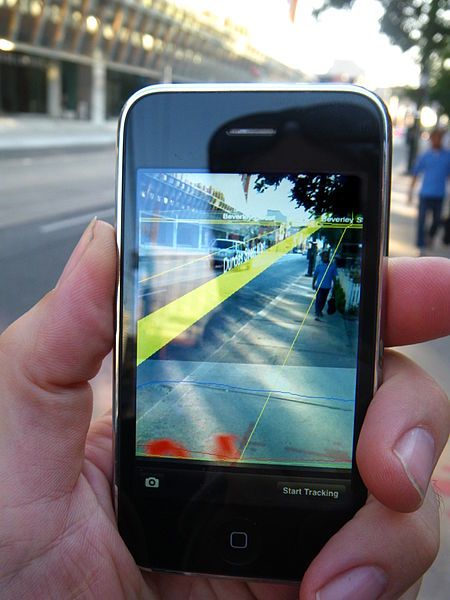
If you upgrade to Glasses, these 3D skins based on Hollywood actors will seem more real, a pretty ghost that talks to you, handles your finances and email etc. Augmented reality already exists in simple fashion on the iPhone and its competitors. This is relatively cheap to implement compared to most of the transportation issues so I expect it will continue to move forward, especially in dense cities like the Bay Area and New York. An easier interface for your information needs is pretty easy to do and takes little energy to do it with so I expect this to become commonplace. We already have people photographing produce in grocery stores with their phone to ask their spouse if this is the right thing to get. That's the downside: yet more consensus blame-shifting rather than actually making a decision yourself. Its a huge problem in business because the basic cowardice makes for bad outcomes.
A little distracting for your driving glasses.
I used to work in GPS, which enables augmented reality to function, tying structures to real world coordinate systems supplied by satellites and later cellphone tower triangulation. That's how your phone GPS actually works btw. It's not receiving data from satellites. That doesn't work without at least a 1.2 inch antenna. You don't see that on your phone because it doesn't have one. It's just triangulating off the available cellphone towers which is really easy to do provided your phone has three towers in range. This then provides the data, within about three feet, of what you're nearby, thus telling the phone what virtual objects need downloading and what to display. It then pattern matches, if its a good one, or uses a compass and the camera to orient, and displays the object as if it were really there. The wiki article above has examples.
Obviously, augmented reality today is still very crude and the background work hasn't been done yet. I'm sure everyone has a story about how GPS gave them bad directions at least once. Garbage In, Garbage Out, and GPS is one of those receding horizons problems because you always want more finely detailed data, which costs more money to gather, but yields ever smaller values meaning you are willing to pay ever that much less for it because you're used to the big sweeping generalizations and ignore the quality of the data source in your pursuit of Rock Star economics. Small wonder the nation is in so much trouble with that sort of reasoning.
Worse, that kind of data is used not just by marketers looking for a way to fine tune advertising campaigns but politicians making real decisions about development and spending. I did GIS/GPS for the local government, you see. The data became part of software that all the executives and their assistants were required to use for data mining purposes. Drill down? I was saying that 12 years ago, and knew the proper context. SQL became my buddy. Unfortunately, budget cuts resulted in me finding a new job and I ended up working in high speed wireless data (aka 3G) which enables augmented reality to function. Japan is on up to 7G or so by this point. That's what you get when you do NOT support legacy hardware, which typically hogs bandwidth by generating noise and slowing everyone around you down. New tech, properly implemented, nets you fancy outcomes. Another point for Japan.
Even as we approach the end of cheap oil, and will be riding bicycles as primary transportation in a few short years, we'll probably do it with tablet PCs tied wirelessly to augmented reality goggles, and there will be people updating the GIS data and photographing addresses as an actual career. I imagine there will eventually be video games for driving in rush hours that don't exist anymore, for anyone feeling nostalgic towards commuting traffic in stop and go, and the sprints between the snarls that we know so well today. That may seem silly to you, but lots of people play video games where they fly airplanes they can't afford, or play football with players they've never met, or swing swords and point arrows at historical enemies centuries dead. Virtual escapism has its place.
The biggest upside of augmented reality is the ability to do engineering. We've seen it in Iron Man 2, the wireframe visualization scene. We've seen it in recent James Bond films, and you can buy versions of it in modern computer operating systems with touchscreens. Many are very intuitive, which is what is needed so that educated older people will use them. Back in the day, my elderly parents wouldn't do much with the computer because they didn't understand it and it didn't seem very useful. Now that they've got digital cameras and websites and everybody they want to talk to has email, suddenly all that stuff I was muttering about 15 years ago is hitting home. Computers ARE useful after all. And not just to geeks in cubicles.
I used to work with a guy named Paul (last name forgotten) at my GPS job, who rode a bicycle and had a laptop in his bike saddlebag. He made me look reasoned and polite, a class A(ntagonistic) Liberal (Splitter) Green party guy with anger management issues. Like me, he worked with dots and lines in a GIS database. He and my supervisor both had laptops when that was a bit unusual and made sure people saw them using them in the cafes on Broad Street in Nevada City.
Nevada City is where your Football Game got all those fancy graphics flashing all over the place, and how the scoreboard updates, and how your TV news has those windows in the screen and banners popping up or sliding across. The hardware to do that literally comes from there, supplied to the whole world. Nevada City is no stranger to high technology, not at all. However, its also the closest town to San Juan Ridge so there's a huge hippie population that comes and goes, hanging around. You end up with this clash of cultures, and some crossovers that are even more extreme than Apple Computer pretends at, or Google actually implements. If Make hadn't been started in Sebastopol, it probably would have a year later in Nevada City. I could easily see O'Reilly publishing moving there too. Conflict is good for evolution. I haven't seen him in 10 years and its entirely possible he's writing GIS augmented reality apps for iPhone or Android. It would be the right direction for his career ambitions. I'm not into application development. I like analysis and content, thus the blog. I currently live in the town next door so those who still work, many of them work at that TV display control company. This is a tech center.
I can foresee a future where augmented reality is implemented, up here in the woods. Where people up from the City for a romantic getaway, stroll up the street wearing Google glasses and getting lectured on the local Gold Mining history, flickering through the slideshow of what a building used to be before it tells you what's on sale there now you might be interested in if you act now. It will watch your pupils dilate, which reveals your interest or disinterest and fine tune its records of exactly who you are, and what they should try to sell you.
I can foresee virtual billboards on your windshield as you drive down the highway. The view is still out there if you roll down the window, but the windows display ads instead of the real thing while Google Car(tm) (or Nissan or Mercedes or BMW Autodriver) drives you to wherever you're going. You have to pay to get rid of the ads and see the actual cityscape or countryside outside the window. That's an advertisers dream. I shudder, but people get tattoos of political candidates who lose elections so there's an unlimited amount of dumb going around when there's money involved. Signing contracts for a lower price on your electric car in order to be forced to view targeted advertising while you drive? Yeah, people would do that. Expect the outside to display ads too, ones the scroll across on display space leased to the advertising network that paid for your car discount. Laugh. I dare you. What is Candlestick Park's name this year? Ultimately, Augmented Reality is going to take all that internet spam and ruin the real world too. How long before Viagra ads break through that sale at JC Pennys and offer to augment something completely different? I dearly hope that Ryan Reynolds (Assistant) has a decent spam filter.
Thank you! The CB500F motorcycle looks like the sort of machine I want to buy. It's practical, affordable, and fills the gap. You will end up selling a lot of these, I think.
Some say this should be lighter or faster or have an aluminum frame to save weight. I don't care about that. I like that it's enough power to climb my local mountain highways and the looks are decent. I don't have to limit myself to buying a 250cc anymore, or paying a little too much for 300cc.
If you make this bike that's full on old school standard and put a 500cc air cooled engine in it, that would be just about perfect. I happen to think that motorcycle riders are getting more rational about their choices, not less. Something to do with the available incomes to pay for it and gasoline prices providing the excuse to ride a bike for your daily commute. Classic lines and just the right amount of shiny chrome, an unpretentious riding position, its practical and beautiful. That fits the definition of elegant.
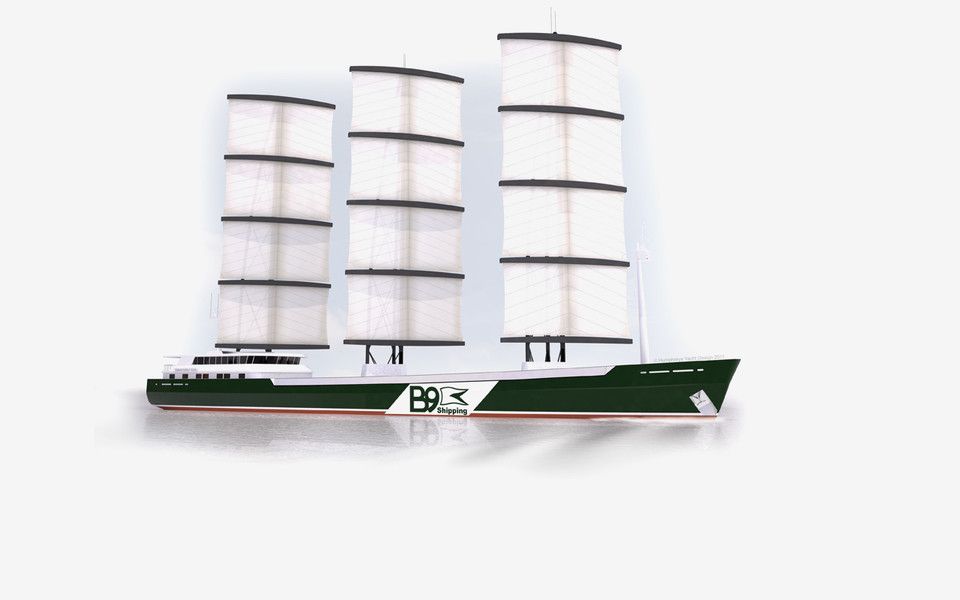
Since the oil is running out, eventually we'll see the costs of transporting goods for import exceed the cost of making them locally. This will dramatically cut down on the sea traffic, and the need for monster sized cargo ships. This also opens up room for smaller cargo ships using sails to operate. Before big shipping diesel engines and coal fired steam, cargo was moved on the coasts by sail. This had its drawbacks, such as being becalmed (the wind stops) and never knowing just how much provisions to stock if that goes on for a while during your voyage. There's a lot of risk, using sails. The payoff is it uses no diesel.
Only 5 in use...for now.
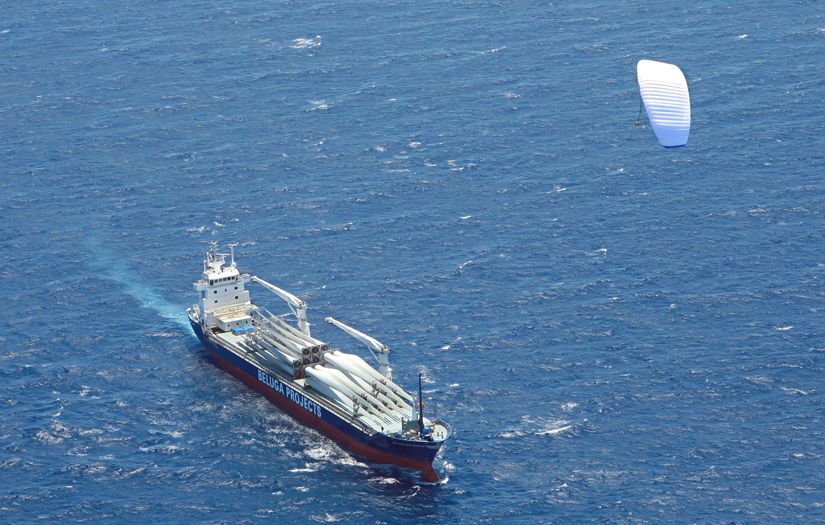
There are starting to be cargo ships that deploy kite sails for the appropriate times to cut fuel consumption 15-25%, but that's a half measure. We are living in a time where its entirely possible that we will personally witness the return of the age of sail. Sail with GPS, electric winches, carbon fiber sails and masts, and pumped ballast systems so sailing is a lot safer than its ever been before. This is a good thing, since we know how sailing vessels work and every graduate of the US Naval Academy is required to get degrees in both electrical engineering and naval architecture (ship building) prior to graduation. That means there's a lot of potential ship captains and designers floating around in the world. Automation also means that crews are smaller so modern crewing requirements are pretty similar. We also have solar panels to generate power for refrigeration, radios, and reverse osmosis or distillation setups for fresh drinking water. You can still get flipped over by a rogue wave or a squall, but sailing is a lot less troublesome than it used to be. While conflict with China over domination of the seas and piracy remain concerns for the industry, these problems are just additional risks to consider. Overall sailing is going to be a good career.
Old School
I can easily predict returns of the routes along the Eastern Pacific from Chile to Alaska and back and many stops in between, as well as the old ferry services on the California coast, and construction of sail-driven fishing fleet. Combine electric winches with triangular sails and its a great deal more challenging to catch sardines off Big Sur or near Vancouver Island or the coast of Peru where the upwelling currents have famously driven schools of fish onto the beaches. We may turn up our noses but dried and powdered sardines were a staple food in Pre-Colombian cultures. That doesn't sound very appealling to me, but canned sardines are what they served on English tables at the end of the 19th Century. The English have been all about seafood for centuries, thanks to having a lot of problems growing enough protein on their soil. Records of Cod catches have proven invaluable for determining ocean temperatures off of Iceland for the last 1200 years. Local fishing sailing ships combined with onboard freezers means almost modern convenience, which means it really can be done.
Automation is key.
I'm sure we'd like to retain access to chocolate and coffee, which cargo sailing ships can provide. We'll pay more, but we'll still have them in our diets. This is a good thing, because it means we don't see an major cliff to international trade after all. A decrease, at first, while the ships are constructed and crews trained to operate and think about sailing, using the available winds rather than point the ship and turn on the autopilot, check it again in 10 days kind of sailing done these days. Its not really THAT bad, but its very automated from what I understand.
Will your mast fit under that bridge?
The other aspect of this is a return of small ports along our coasts to anchor ships, for loading and offloading cargo and passengers. Small ships can go places the big ones can't, meaning that small harbors stop being eyesores or hobby boat parking and start being commercial centers again. That means jobs in places that largely died 50 years ago. Jobs for construction workers contracted to rebuild the needed structures and warehouses. Jobs for local longshoremen and ticket sellers and customs inspectors. Jobs for boat construction and maintenance. Jobs retrofitting ships with sails. Welding can do some amazing things. Boat pilots and small vessels for transferring cargo from ships offshore to the port itself can eventually be replaced with a proper pier and dockside. Picture the Santa Monica Pier with the amusement park cleared away, with the pilings inspected and reinforced, overhead cranes for lifting shipping containers on and off the ships, and with schooners anchored alongside offloading and loading cargo for LA. Maybe they'll build a new pier instead, or maybe Long Beach harbor will just get busier.
It will be hard for the Coasties to adjust to the idea they're living in an industrial area now rather than an expensive oceanfront view they think they own, but they'll deal with it. Rebuilding piers back to function instead of tourist attractions will be expensive and time consuming, but it will also be necessary. Someday there may be working fish canneries on Cannery Row once more. Or maybe they'll just pick some other harbor on the coast that's a bit less stuck up and has an available work force willing to do the job. Eureka has a fish cannery, but shipping out the canned fish will require either the railroad put back into operation or a cargo ship. They'll probably do both.
Sailing the coast of California back and forth, carrying passengers, vehicles, mail, lumber, and canned fish will be an amusing career as well. Operating a seagoing ferry won't be like crossing the calm waters of a bay. You get weather out there. You also might find yourself with a cargo of cattle or horses on one half of the deck, electric cars the other, and passengers loitering above. Being a ferry captain is a challenging job.
It will be cheaper to run ferries up and down the coast than it will be to keep 101 maintained and paved with asphalt, particularly since the tar could be refined into gasoline with a much higher profit margin. The refineries are already doing this. The oil they're getting from Mexico and Saudi Arabia is very sulfur rich as it is, which produces a lot more corrosion during refining and causes more accidents, thus higher environmental standards, thus increasing cost. You can't stay in business unless your product sells for max value, so don't count on paved roads lasting much longer. Travel by rail and sea are going to be a lot more comfortable than dusty gravel roads.
Soon European college tourists will come sail to America and ride the rails with backpacks to have adventures. A reverse of American college tourists doing the same in Europe. Whether they work passage in the galley or book passage on a more comfortable ship is up to how adventurous they are. We're going to live in times surreally familiar to Jack London and Robert Louis Stephenson. And I haven't even gotten to the Civilian Conservation Corps rebuilding projects. Oh, what times we'll see!
As of today, 20 states have petitions to leave the United States, one of which has the mandatory 25,000 signatures. That would be Texas. Next closest is Louisiana, which has half that many (today). I genuinely hope they get their signatures because Louisiana has been sorely used since Katrina. Between the flooding, the riots, the cleanup costs, and the loss of permanent population, Louisiana has not seen much back from the Federal government.
I realize that getting it on the ballot doesn't mean the Federal govt's chief executive will sign off on letting these states leave the Union. Even though its in the Constitution. And the few thousand signatures are far short of a proper referendum by the whole state, which still has to happen. It would amuse me greatly if Texas succeeded on leaving the Union and became their own country again. People forget that they were a Republic prior to being offered to join the United States of America. They retained the right to leave peacefully in the agreement. Liberals love to deny that as long as they're in power, but the moment it's reversed, they crow just as loudly for Secession.
So was California, but California surrendered without firing a shot when the US Navy showed up in San Francisco Harbor. Fremont should have held out for terms like Texas did. We might have a bit more honorable population if we had retained the right to think for ourselves instead of kowtowing to a Federal govt that openly MOCKS our state in the most derogatory terms and otherwise ignored us during the election despite the fact that a considerable portion of it voted for the other guy.
Sadly, even with those red districts, California is pretty Liberal and Dependent on welfare, subsidies, and AFDC is more a lifestyle choice. Sigh.
I will feel like the above petitions have real traction when all the Western states, and all the Midwestern states with majority RED on them file petitions with millions of names on them, not just 25,000 each. When Oklahoma and Tennessee and Kentucky all say "See ya, Feds" I'll be very happy at the outcome of real progress against our national abasement. If that actually happened with enough states, with supporting referendums to leave the Union to the point that the President had to either let them or attack with troops? Wow. That would be quite surreal.
I'm sure the Liberals will scream and yell that its redneck hillbillies, not realizing that name calling of that sort is exactly the kind of thing to make even more names go on the petitions. So go ahead. I'd love to see that outcome. A reasoned discourse as to why the Midwest and Western states should remain in the Union? Give it a shot. Go on.
Today is Veterans Day. It is beautiful and sunny, though it was just above freezing this morning at dawn.
Apparently, in their infinite greed, Wall Street is open for business despite this being an important holiday. The big nonsense buoying (temporarily) the stock market this morning was the US Govt claim made that the USA would be energy independent by 2020 because they said so, and exporting natural gas by 2030, because they said so. Because, you know, that's totally rational.
The last time I checked you can't mandate scientific discovery. You can fund the attempt, but you can't mandate it or guarantee results. I recall reading articles in magazines published in 1920, saying we were only 35 years away from clean fusion power and we just needed to invest in it to make it happen. Then a similar article was published in 1948 saying the same thing. And again in 1975. And again in 1990. Just 35 years from fusion power. Because saying so makes it happen. Wanna buy a bridge?
Looked at through the lenses of history, its obvious that the Tokamak reactor is a con game, perhaps unintentional at first, but over time people got so invested in it that they won't allow a serious engineer to review their plans and determine that they can't actually work. Same with the Nova Laser in Livermore, which was supposed to get around the Tokamak's problems by doing fusion at the molecular level. Turns out there's just so much loss to heat in the battery system that you can't generate enough power to sustain fusion. Whoops! Yet another case of an engineer being needed. Too many of these scams are Receding Horizon Problems, a definition which someone keeps deleting from Wikipedia despite it being well known in Intro To Engineering. To wit: if the process doesn't work at the small scale, it won't work at the large one either. Idiots ignore this to their peril, and our tax rates.
If we do somehow find enough natural gas to export we'll just fall under the Export-Land Model, meaning we'll use that gas for more of our own needs, like running our cars on it. Don't laugh. Many countries already do that. They don't get much range with compressed natural gas, but its better than walking or pedaling, and it beats begging for gasoline when your nation can't afford a refinery for oil. This is not to say we aren't finding natural gas. Despite all odds being against it, Fracking for natural gas is getting some out. Perhaps a significant amount.
I would love for fracking to open up the Oil Shale in Western Colorado. That's a huge unit of rock and a truly significant amount of oil is trapped in there, Saudi Arabia big. Previously, the only way to get it out is mine it, boil it in a pressure cooker till the shale expands to release the oil, then separate the oil from the mud, and then dispose of the mud. Similar to the Alberta Tar Sands, only underground. That's a mining operation, not a drilling one. And the energy needed to boil the rock? Not a small amount. More than the oil is worth. We call that Negative EROEI. That's Fail, right there. So there it stays, waiting for the price to be right and another method for extracting the oil to come about. Maybe fracking will work.
Fracking is really a crapshoot though, since depending on porosity and permeability of the source rock, missing the oil or gas deposit could be the majority problem much of the time. There's also a great deal of chance involved too. You either split the rock through the pin-head worth of gas or oil or you miss it. Odds favor missing. This is why the biggest money in fracking isn't in fracking, but in buying and selling the leases for fracking. It is, in essence, a Real Estate game. Whether the actual fracking produces lots of energy or not, that's for others to answer. It is still Fossil Fuel, after all. It will run out. Reworking the tailings being fracked may extract more someday, but at some point growing it from algae is going to be cheaper.
And that's the other thing. Growing fuel from algae and plants is very expensive. If we'd gotten another president, we might have seen the end of the Corn-Ethanol subsidy and be allowed to import fuel ethanol from Brazil. That would give Brazil motivation to do business with the USA and they have a big population mostly in poverty that would like to do business with anyone else. Brazil grows sugar cane and turns that into fuel ethanol, cheaper than we can grow corn for the same purpose. Since those farmers in the USA are growing fuel corn instead of sweet corn, our food prices went up. Lots of products based on corn end up in our food. The Corn Lobby was happy to get the subsidy to grow corn for more than it was worth to not compete with Brazil who was... you guessed it, barred by trade tariff from selling sugar cane based ethanol to US drivers to lower the price of gasoline. Yep, that's how lobbyists make the rest of us poorer. Right now Brazil is dealing with China and India, who are fuel hungry but much farther away. Selling to the USA would be good for Brazil AND America, since our food prices would drop again and we could export our corn to hungry people again instead of wasting it on making whiskey for our cars. I will note that it was W who first approved this deal. Obama just kept it going. Both political parties are thus equally guilty of screwing us over.
I think, in the future, we'll see a lot of ethanol powered vehicles, particularly scooters and cars, since cars have been mandated to work with E85 (85% ethanol fuel) since 1997 or so. Mostly that's with stainless steel gas tank and fuel lines and with alcohol resistant synthetic rubber hoses. Cars are mostly ready to go. Its just the fuel isn't there yet. Someday, when we're really screwed for supply, we will buy fuel from a local moonshiner in exchange for fresh eggs, veggies, canned food, whatever we can barter with. That keeps him going and us able to go somewhere without pedaling. That's our future, not the claims of silly people on the TV screen babbling about govt mandates. That's just crazy talk.
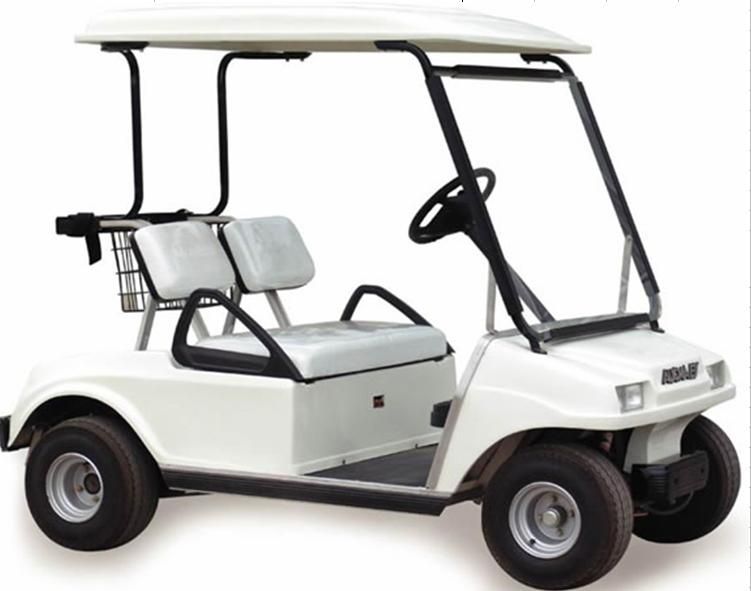
I know that we could pretty easily convert many cars to run on Natural Gas. Replace the fuel lines, change the chip, replace the back seat and trunk space with a pressurized tank. Its like driving with a grenade. Filling stations would install the pumps to make that sale. We might do it at home, buying the compression pumps ourselves and absorbing the cost over years of use. If we're careful it will work till the Natural Gas runs out. And maybe by that time, we'll have something else, or just be ready to accept pedaling bicycles to work. Or take a golf cart for the grocery run.
Access to cheap energy is getting to be pretty sketchy. We've been fighting wars over cheap energy for the last century. We exported our Middle Class jobs to developing nations for Profit, following that second step of "?".
A lot of business plans seem about this well thought out.
Since the Middle Class still votes, trade
tariffs are the reasonable outcome for our future. If only just to protect the few
remaining jobs that are still here, possibly in retaliation
for the Europeans having trade tariffs first. Can they afford not to?
Greece, Italy, and Spain are all doomed. France and the UK are next. They can't survive, politically or economically, unless they can employ their voters. Anything less will lead to economic and possibly real civil war. At the very least the destruction of wealth. The torches and pitchforks uprisings came from Europe after all. Imagine those angry mobs lobbing mortars into rich people's mansions or storming banks to empty the vaults of gold. Such things have happened before. Remember Sarajevo? Europe certainly does.
Everybody needs to take a hard look at China and decide if doing
business with them really makes sense. Societies that destroy their Middle Class are societies begging for civil war. Greed does have a limiting factor: its called "Revolution". If Capitalism is to survive in an increasingly Socialist world, then Capitalism needs to reign in its Greed and think hard about the people its trampling for Profit.
More and more trade is being
forced on the world in Yuan instead of Dollars, but remember the value of that currency is
decided by the whims of COMMUNISTS. We can
kid ourselves, but China does what it does for its own selfish reasons.
We are obstacles to China's ambitions of being the Only Empire. I have to remind people we don't have to kowtow to China. They can make things cheap, but so can we.
Make Blog points to
Micro, short-run manufacturing being the future, or rather "the
Present". People are doing this now. Home workshop crafting of professional level components is no longer just for experts. 3D printing, CNC machining, all sorts of new ways to make things using Hobby-level machines can do the
majority of work so you don't have to become a master machinist, a
career in and of itself. This is a huge step towards solving problems in physical hardware for specialized applications. Since
you can use machined parts created by Rapid Prototyping (RPT) methods,
to then build the actual components or assemble them, tooling up a
factory in a fraction of the time that it used to take in the 1980's,
costs are way down, and you don't have to make so many to make a
profit. A recent article on this subject over on The Kneeslider is a good positive read on the trend.
Imagine if all the bicycle factories were washed
away in a Typhoon. Suddenly we have only the parts in warehouses and on
our own bikes to keep our bikes operational. What do we do? Scan the
part with a 3D laser array. Disassemble and scan again. Use the uploaded
data to build a computer model of the part, including fit and bearing
surfaces. Use RPT to build the machines to make the parts (if not making them directly), presumably listed in libraries of mechanical devices for those specific tasks.
Do a run for the needed number of that part. Store the extra in a box in a warehouse for shipping. Save the plans and crucial parts for manufacturing in your archives for future runs. Voila. This is the modern way to do it. Maybe pass the base parts to an
engineer for improvements or designation of materials or heat treating
requirements, as that's a good idea. Keeps the engineers occupied enough
to get them creating new stuff. Designers with better tools can bridge
the gap and solve the problems without involving China at all.
Repeat the above steps
for all sorts of material goods, using people for the assembly portion
because its usually cheaper. I have done lots of manufacturing like
that. Its boring work, but you can train people for it easily, and the
simpler the job is, the quicker you can train people to do it, the less
they mind being retasked to a new simple job when you complete the Run
and retool for the next product.
Crews of people doing this reliably,
showing up sober and ready to work, that's worth hanging onto. Managing them, making sure they get paid, get healthcare, get reliable wages, that's a career. I see a future in that, for lots of people. Expand the idea into owning manufacturing space, taking on contracts, owning RPT equipment and specialists to operated and design. Eventually you've got a design house and manufacturing capability instead of just a team of temps. There's expansion. Pass shares down to the workers so they have motivation for the company to succeed financially. Give big bonuses. Take a modest cut rather than a greedy one. This is a huge difference compared to the old way of doing things, the Exploitation route that drove all our jobs to China and India. Greed MUST take a back seat for there to be any future for manufacturing and employment in America.
Operating this way is a huge change that modern businessmen need to adapt to. They can try doing things the Old way, but that probably won't work. These days retaining employees is your STRENGTH and you must cater to them or all you've got is yourself. If its easy to train people to do something, you can bet someone else can do it cheaper than you, and even if they can't, you'll be competing with them viciously, and once they succeed, you've lost your profit margin. That's not a good business to be in. Retaining employees, and thus capability through knowledge and experience, that solves most problems or reduces their impact at least. Ergo, Quality is still King. And quality always costs money. A strong manager is someone willing to restrain their greed in favor of business longevity and overall survival. I can't tell you how many times I've watched businesses consume themselves with short term greed and ultimately fail. Really, I can't. I signed NDAs.
I think small scale manufacturing is the main alternative to being a farmer, and its going to take a lot of work to bootstrap ourselves up to this. I had hoped that all the out of work Detroit autoworkers and engineers would have started thousands of businesses, doing what they do best but weren't allowed to produce thanks to their jobs preventing them. With the freedom of unemployment, I thought: "Wow! We will finally see what American engineers can do." No such luck. If it's happening, they're still in the R&D stages.
Seeking hobbyists solutions to problems is a big part of why I read the motorcycling blogs, because small hobbyists are doing some very interesting things to bikes, sometimes just looks, but sometimes serious engineering. I respect that effort and cheer them on. I'd like to see that same concerted effort put into car parts, improving them through after market parts for horsepower, lightness, handling, fuel economy. Stuff that people care about today or will care about soon enough.
I think that America has a lot of advantages over Castro's Cuba, and we will find ways like the Yank Tanks to keep our vehicles on the road, even if we're down to bicycles and pedi-cabs with electric assists. China may be content with that huge gap between Rich and Poor, but America has higher standards of living, standards most of us agree on. China may someday stop exporting parts for housewares to America (maybe because we impose a trade tariff on them), and spare parts for our dishwashers and washing machines. We will make our own. Probably better too. Repeat procedure for every piece of "Made In China" we've bought for the last 15 years. We'll figure something out because we're too mean to die. And we don't need China to live. Sorry, China.