Monday, December 17, 2012

Don't Blame The Shovel

Every year, around 32,000 people are killed in car crashes in the USA. Nobody tries to ban cars, even though someone was driving them when someone died. Cars are dangerous. It is understood that the driver is responsible for the accident.

So why isn't that true for firearms? The firearm, like a car, is a tool. Its like a broom or a shovel. It does a specific job. When a crazy person picks up a kitchen knife in China and stabs a kindergarten classroom, nobody is blaming the knife manufacturer or insisting kitchen knives should be banned. It is understood these are the actions of a crazy person, that the crazy person is responsible. The recent school shooting in Connecticut, and the Mall shooting in Clackamas (Portland), Oregon, and the other holiday insanity murder sprees... these are actions of crazy people. Blaming the gun that made killing all those people easier... If there was no gun, they'd have used knives, and still killed a bunch of children. The cases in China proved that. It was the act of a crazy person. None of these lunatics had the rights to own firearms anyway. They were known crazy. The guns were stolen.

The politicians trying to ban firearms, again, are just trying to hurt their Republican opposition since the NRA is largely a conservative and Republican organization. Its the elitism and citified hatred of Country Folk that the Liberals keep forcing down our throats. And that's more than a little unfair. The NRA has its faults, but its primary purpose is to protect the rights of Americans to keep and bear Arms for both self defense and hunting, which are national rights earned by my ancestors during the Revolutionary War.

It is ridiculous to blame the shovel for the hole, and to blame the gun for the deaths. If you do, you're blaming the car for the crash, and the dress for the rape. Its all about hypocrisy isn't it? Finger pointing. This is "Blame Canada" all over again.
Which was really the point all along. The Liberals see a tragedy of some insane person murdering helpless children and immediately EXPLOIT IT to hurt their opposition, contrary to logic or morality. This is exactly why conservatives HATE liberals right back. This is a huge, unsolvable gulf. I fear that someday, the gulf will turn to open warfare. I really hope it doesn't, but Chile put people in ditches over these sorts of differences. Are we really that much better, morally and ethically, to not take that step ourselves? Perhaps when we're defunding Medicare so the elderly die of pneumonia in chilly rest homes, we won't feel responsible. After all, we won't be shooting them because guns will long since have been banned. Just like cars and shovels and kitchen knives. After all, its the tool's fault that people using them are nuts.

Friday, December 14, 2012

What Science Should Be Doing Now

I'm a fan of chimaera splicing, providing it is done in a sane and smart way so it can't accidentally destroy the world. We have enough problems with kudzu and rye grass and zebra mussels and all sorts of other imported things destroying native habitat. Still, nitrogen fixing root nodules from legumes on all grain crops so they enrich the soil as they grow instead of depleting it? That would be awesome. Cuts down on the need for nitrogen inputs to crops, which are often made from natural gas better used for other things, and for the need to grow soy during crop rotation. That means you could feed the world and increase the total arable land, provided you have water. This is a good thing. This one thing could feed a couple or three billion people indefinitely. Ponder that for a moment. How many wars would that stop cold? 
 
I was recently watching a travel program where a guy running a fair trade coffee processing plant in Papua New Guinea demonstrated that the fruit of a coffee bean is actually a type of sweet cherry by eating it. Now, at present coffee is only grown in tropical and sub-tropical places but it's hugely popular in cold wet places like the Pacific Northwest. What if coffee was genetically modified to grow in colder places, and that the cherry was appropriately tart and sweet for a good pie? I like cherry pie. It needs to sweet enough to go with coffee and tart enough not to be yucky. Its a tricky mix to pull off. You could shell the coffee bean, make a pie from the cherry, then roast the bean and make the coffee to go with it. Wouldn't that be awesome? I think so.
 
You are probably think I'm being completely silly, but ponder this: everywhere in the Taiga (the area near the poles where its all pine trees before it gets too cold and you have Tundra plains) there are needle leaf trees (pines). The pines are poisonous to wildlife, even bugs due to the sap in them. They grow there because most deciduous trees can't drop their leaves fast enough and drain out their sap to avoid being destroyed in snow storms, which can shatter the limbs if it gets cold fast enough. There are exceptions like birch, alder, and aspen, but most other trees die in the cold. What if fruit trees like apples were modified to survive the really harsh cold? Then places like Northern Canada could have apples growing instead of wasting all the nice summer light growing marijuana and zucchini. I've been to Alaska in the summertime. It was... pretty okay. Apply the same modifications to other fruit trees and maybe grape vines. 
 
Imagine if you could grow good grapes in Britain and Norway? That will require modifying the skins so they don't rot quite as quickly when wet. This is why California wines do so well. We don't have summer rains while the grapes ripen. They only get water when we want them to, via irrigation. We get a higher yield of better concentrated grape juice, ideal in sugar content and acid for best possible wine making.

Now take the basic chemistry of desert plants, namely how they thicken their plant fluids using Selenium oxide and selenium sulphate to deny evaporation biochemically. This allows plants to survive extreme drought and not turn into a husk. This is how cactus works. Apply the same trick to fruit trees and vegetable crops, but put in a filter/membrane that keeps the selenium out of the fruit so the fruit is edible instead of poisonous. Pause and consider what that would for Northern Mexico, Peru, and the Sahara. Suddenly you could grow serious crops there with minimal water. All that bare land would become green and feed a billion people or more. The world's deserts would have a massive increase in carrying capacity.
 
Use coastal vacuum pumps to desalinate sea water, then other pumps to send it inland to the irrigated crops and you've solved world hunger provided the equipment stays maintained. 
 
See, the biggest problems humans face are about food supply, water supply, and energy supply so they can improve their standards of living and keep their babies from starving to death. This makes mothers angry and husbands end up going to war over those resources. Its been like that forever. But it doesn't have to be. If you expand the resources and reduce the demand for them by making them more accessible, then you can have a larger population and stabilize WITHOUT going to war. That's a BIG deal. This is something biotech could do, if it wasn't so damn greedy and obsessed with catering.
 
The best solar panel presently available uses Selenium and Arsenic, and yields 47% efficiency, which is 3 times better than the state of the art panel in production, and about 8 times the efficiency of the kind most people use on their house or boat to run electrical backup charging. Georgia Tech came up with a method to thicken solar panels such that a photon is intercepted and generates power 4 times each. This layering process makes a single panel around 3 times more efficient in the same amount of space. Georgia Tech used federal grant money, and its a public university, but they are pretending to own the patent despite this. I imagine there will be some Supreme Court action to determine public funds means public patents, meaning with the needed coolant backing, the above layered panel using the above SeAs compound means not only can you preheat your water heater using the waste heat generated on the panel, you can also run your house and charge a battery for your car so you can commute to work, assuming we solve the battery problem someday. If hydrogen could be stored safely, this would work too.
 
This is what I keep hoping to see science do for the world. Maybe having enough to eat would allow the more maniacal govts to either calm down or be deposed by the saner mothers who would very much like a copy of good housekeeping instead of yet another genocide. Imagining stuff like this is what scifi writers like me are all about. So its not just for the maniacal laughter, though that is fun too. It's a proven stress relief. 
 

Tuesday, December 11, 2012

Travel Video Recommendations

I'm going to start with the ones involving Charley Boorman.
Hero of Adventure Motorcyclists Everywhere.

The Long Way Round is a motorcycle journey that begins in London and ends in New York. The two cyclists are Ewan McGregor and Charley Boorman, both movie stars though McGregor is best known for Trainspotting and some silly scifi movie series. As novice motorcyclists and campers, they have a crew of people help them cross borders, carry emergency gear, and do most of the filming, though the man behind the camera riding another bike with them is Claudio Von Planta. They travel East across Europe, Russia, Kazakstan, Mongolia, Siberia, then fly from Eastern Siberia to Anchorage, Alaska, then take the Al-Can highway down to the Great Plains and finally cross the USA into New York City. The whole journey takes about 2-3 months. The scenery is fantastic, and the roads vary from normal paved highways to threaded dirt tracks through a muddy wasteland, sometimes disappearing entirely. I happen to think the motorcycles they chose were too heavy, and that they're carrying too much gear, and that they should have waited another month before leaving so water levels would be lower and they'd deal with less mud. That's how other people doing a similar trip do things. You can buy this BBC documentary series on most online retailer sites such as Amazon. Both this and Long Way Down are on Hulu.com in the lifestyle section, of all things. Its legal and commercial so you can watch it for free without risking jail. This is exactly the sort of thing which should be showing on the Travel Channel, as well. My favorite bit of this series begins in Kazakhstan and goes across Mongolia and Siberia on the Road of Bones to Magadan. It's about 3-4 episodes, the meat of the story.

The Long Way Down is a Motorcycle journey, same crew, that begins in the northernmost extent of Britain and goes to the southernmost tip of Africa. They cross the Channel by Chunnel Train, ride across France and down through Italy before taking the ferry to Tunisia. Motorcycling along the Mediterranean Coast and into Libya (Khadafiy's Libya!), they have to abandon some of their crew and meet them on the far side in Egypt. The travels through Africa are surprisingly calm and safe. Every country's border guards express amazement they survived crossing "that other guy's country. That place is lawless". As you'll see, most of the people are nice. And most of them seem glad for the visitors. Once again, their bikes are too heavy, and paranoia about lions provides some unintentional comedy. This is on Hulu.com. Watch it if you have time. It is very interesting. Clearly, Africa is the next Frontier. I hope that Americans will be involved with developing it, not just leaving it to the Chinese who tend to be both ruthless and genocidal based on their ONGOING ACTIONS in very recent history there. My country hasn't treated Africa very well either. One would think that higher standards would apply.

There is a box set available of Long Way Round and Long Way Down which also includes the Race to Dakar, which is interesting for serious race speed offroading and a laundry list of everything that can go wrong. I learned from that one that KTM motorcycles are amazing performers that require immense amounts of replacement parts and that they're not reliable for serious travel so I wouldn't own one. Boorman is the chief racer of this one and seeing him have to man up for the challenges of the Dakar Rally is quite amazing. The huge number of competitors and the behavior of some of the nations they cross eventually resulted in the Dakar Rally moving to South America, so it now crosses Argentina, Chile, and Peru instead of France, Spain, Portugal and Western Africa. It used to be called the Paris-Dakar Rally. The new Dakar rally has many videos on YouTube, samples shot in HD, edited together. It's really fascinating stuff. Our roads are going that direction. I think we'll be going slower, however.

The newer Boorman series of travel videos is called "By Any Means". The first is Ireland to Sydney: By Any Means and is the LWR crew, with fewer men and translators hired on the fly, using any type of typical local transportation, avoiding planes. While sometimes obsessed with timetables it's still very interesting. They take motorcycles to Northern Ireland, a fishing boat to Isle of Mann, a ferry to Liverpool, motorcycles and various other means across Britain, including train and double decker bus. They sail a small sailboat across the English Channel, which tips us off to Charley having troubles with boats, a curse he remains under long term. Traveling by train, boat, small bus, the back of a truck, even elephant is very interesting going and while the cameras are mostly focused on the countries they visit, you see the state of the people living there, and the roads tell their own story. India, Nepal, China, Vietnam, Indonesia, and finally Australia each have their own courage or hardships. Its a VERY long trip, covered in six one-hour episodes. I found it on YouTube but I'm hoping it will become available on Hulu.com soon so it can be part of the same series with Long Way Round etc.

The following year Charley and Co. go from Sydney to Tokyo, which is even more interesting because there's no agonizing over timetables and by now Charley is a serious traveler and largely unflappable, having witnessed all sorts of threats that are often just posturing for the camera. Australia is friendly and fun, New Guinea not so much. Parts of New Guinea were friendly and trying to be more tourist friendly, other parts need military presence and an ongoing war there meant that crossing into the Indonesian side was denied. This ends up a recurring problem. Indonesians themselves seemed reasonably friendly and civilized so long as you aren't crossing a border. It isn't until the show gets them to the Philippines that you see the truly friendly folks. I have worked extensively with Filipinos. They all speak English and their goals in life are similar to mine so they're friendly and easy to understand, culturally. Other than the Maoists, the rest of the Philippines is a place probably worth visiting, though its like a Mexico with even worse poverty but without the language barrier. Frequent typhoons probably don't help with their poverty problems, and a long series of Dictators (Marcos!) has been disastrous for stealing the funds from needed public works (sanitation, public transit, hospitals, schools). The remainder of the trip is through Taiwan and Japan, which I haven't seen yet but will soon. Both nations are good for motorcycling and have better roads than the more Southern countries.

In every country they hire a guide and translator and some of them offer very helpful warnings or illustrate important cultural differences. In New Guinea, there's a local culture that doesn't allow women to touch men's hair. In the highlands some farmers with machetes demand a road toll because they want money. They're bandits due to poverty. Another place sees drunken locals demanding the government pay them for a bridge that isn't there anymore to a government that long since vanished and has no representatives present anyway. People can get really stupid. In one part of New Guinea, a local tribe has decided they like the look of suburbs so are organizing their village that way, sort of like a cargo cult. They have no electricity, no doctor, no stores, no bridges, no serious sanitation. They want those things but all they can offer is hand built crafts. I wish them well. I'd want those things too, living as they do. One of the locations they visit in Indonesia has some amazing looking houses and bases its entire culture around funerals and the associated feasts. Their efforts go to raising the animals to sacrifice for the feast, pigs and cattle. Fascinating. In island nations ferries tend to be overcrowded, and when they sink hundreds die because there's only lifeboats for a hundred people. The roads are rarely paved, and when they are they're the main roads that tourists see or government officials use. Many of the people riding on motorcycles or underbone scooters tend to skip basic safety gear and end up in terrible accidents, known collectively as the "road tax", essentially meaning blood and death. Banditry in some countries is common, in others quite rare. If you plan to travel there, pay attention to the difference.

The most recent Charley Boorman trip is across Canada called Extreme Frontiers. I am looking forward to that, though ADVRider.com has a bunch of those pictorial trips, as Canada is the sort of place you won't likely run into kidnap gangs with AK-47's, RPGs, and ransoms in mind. I'm really not brave enough to do the kind of travel Charley has done in these video documentaries with the BBC.

There are other good travelogues worth seeing. No Reservations with Anthony Bourdain are entertaining food tourism which goes around the world eating various foods, seeing the touristy stuff. I enjoy the episodes he spends in Osaka, in South Korea, and in Malaysia. He's a cad, but he's pretty funny. That's available on Netflix Streaming and on Hulu and gets played on Travel channel and Food Network, of course.

Rick Steves was a good way to show off Europe back when there were only five network TV channels and one of those was PBS. I watched a lot of Rick Steves and while I don't agree with all of his methods, packing light is a good rule of thumb for traveling. These days Rick travels with his family and meanders around much of Europe, including the Eastern side. Someday, maybe, Turkey and Georgia will settle down into a nice tourist destination. We can keep our fingers crossed on that one. His show is also on Hulu.com.

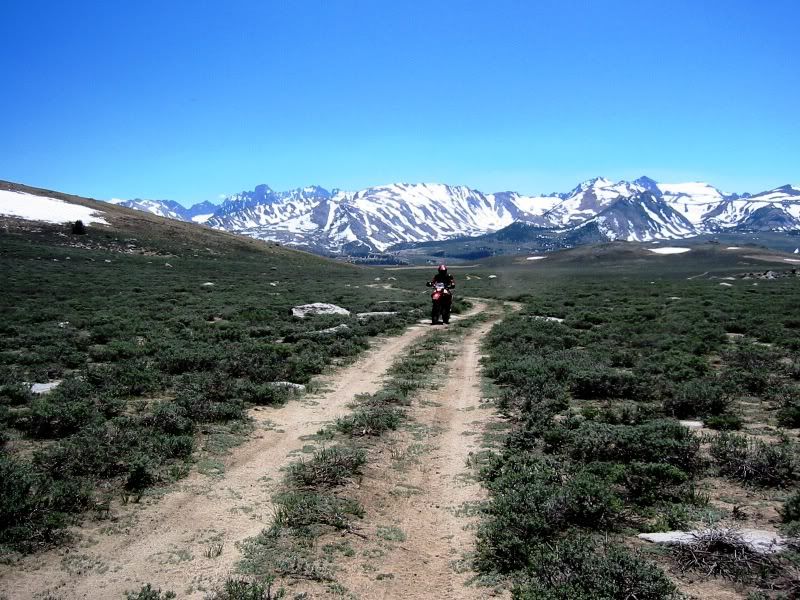
While Central and South America are interesting, I'm not brave enough for Mexico's violence and I don't speak other languages (Spanish or Portuguese) so I can't just ask for help if they don't speak English. I'm glad that someone has gone to all these places so I can watch the travelogues from the comfort of my own home and be astonished at the things they see. America is big enough for me and holds plenty of vistas worth seeing in person. I would enjoy riding a dual sport bike through sections of the Rockies some day.
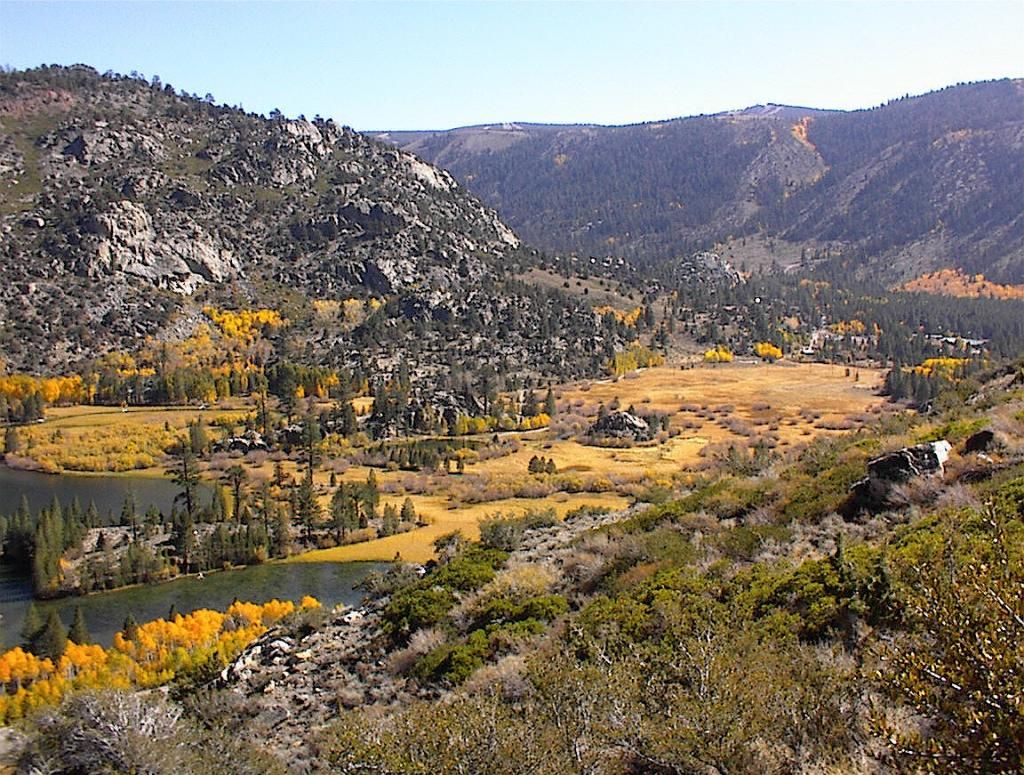
See why I like Bishop so much?

I would like to climb up through the White Mountains that way in a few years. They're plenty tall and offer lots of challenges. I don't care that others have been there before. That's not the point. Discovery is about YOU, not someone else. Go see it for yourself, if you can. If you can't, well, the above videos are a feast you can enjoy. Watch them.

Monday, December 10, 2012

When the Pavement Ends

I have previously posted a video of an abandoned road in Japan washed out and becoming overgrown following a major typhoon (hurricane). The motorcyclist, using an Enduro bike of some make, probably 250ccs, is able to cover immense distance and avoid obstacles and make excellent speed despite the fact the pavement is covered in streams or completely washed away in several places. He was in a wet temperate rainforest at the time, in Japan. It was pretty much like the Pacific Northwest, any part of the Appalachians or NE, or Quebec. Most of Europe has roads like that. You don't see them on Top Gear unless they're doing a 4WD SUV test, usually with wry accusations about compensating for something.

In the desert, flash floods do this all the time (annually depending on luck), and in the forest fires can strip plant life holding steep hillsides up. Fallen trees, landslides, washouts, these are common obstacles to wheeled traffic. In Long Way Round, the team of motorcyclists and their chase vehicles get stuck in Siberia as the spring floods have raised a river high and fast, till it can't be crossed. Rather than wait for it, they try to cross anyway using serious all wheel drive trucks and chains to help them. Not a terrible idea, but waiting till later would have been smarter and less risky. Thanks to pavement and bridges, we don't have to delay our important deadlines for pesky floods or washed out roads. We have people who fix those, keep everything working.

What if we didn't? As it is, Civil Engineers give the USA a D+ rating for the state of our roads and bridges. These are structures that are contracted to be repaired and kept up properly and are so badly maintained the collapse of the crowded bridge near Minneapolis is considered to be the first of many. Think about that. People died, screaming, from the fall or drowned in the river or crushed under the weight of concrete and steel. Modern people rarely doubt their roads, but perhaps they should. We do have money for this, we're just spending it on foreign wars and many stupid things that have zip to do with the middle class. And we're the ones paying for it. However, road surfaces like concrete and asphalt are EXPENSIVE in materials and energy.

Concrete is made by cooking limestone in an oven. It chemically converts into an anhydrous powder that reacts to water and forms limestone. The gravel mixed with this powder adds strength, as does steel frameworks inside. Concrete cracks under tension, but under pressure it is very strong so it is sometimes prestressed using steel cables to resist its weak point. This is why we have bridges and causeways built of concrete that don't fall over. It is not perfect. If the steel gets exposed to air or water or both, it will oxidize and the pre-stress stops working, and the bridge collapses. This happens all the time and can't truly be avoided. Metals want to oxidize. They find a way. Most of the aluminum and titanium on earth is in oxidized form, in mud. Not metallic. Iron can be found in metal form, but its normally rust red in soil or sandstone, commonly mined from that. The upshot of that is why iron is common, it must be remade and replaced for use in our environment, painted to reduce the speed of corrosion. A person has to maintain it, and the harder they do that, the longer it lasts. And the more it costs.

Concrete roads either have reinforcing steel or they get broken, and broken superslab is everywhere. I'm sure you've seen it. Its usually the right-hand lane, where the big trucks drive, often with their tire pressures illegally high to reduce fuel consumption, cracking the concrete from tensional stress. Later trucks shift the pieces until a passenger car driving on that can destroy their own suspension or wreck, possibly killing the driver and passengers and anyone too close behind. This is a real thing, happens every day. That road has to be replaced, and the next overloaded truck with illegally high pressure tires will do it again. Over and over. The stronger you build the roads gives you a slightly longer time before a truck breaks it anyway. Can't be helped. The drivers point fingers, reminding us that they pay the highest road taxes which are supposed to pay for that, and the supreme court just ruled that road taxes have to pay for roads, not welfare checks or other Communism. I'm sympathetic, up to a point.

Now consider asphalt, which is kinda like concrete only its soft and deforms when hot, breaks when cold, and is made from oil and gravel. The oil sells for more money when turned into gasoline instead of left as tar, so the refineries mostly turn tar into gasoline. It makes the most sense for them. This unfortunately means that roads cost more since the tar is rarer and thus more expensive. The price of tar for asphalt has gone way up. We're paying for that in our taxes and when we buy gasoline, and in refinery accidents since refining tar means dealing with all the sulfur which eats through the pipes as acid and causes deadly poison gas leaks that send thousands to the hospitals and cause long term lung problems, even cancer. There's huge pressures on the costs of tar, yet it remains more profitable not to turn it into roads. And that asphalt will wash away, and plants can root in it, crack it, and potholes ruin the road surface of asphalt. And use of tar to mend cracks in the road makes for very slippery surfaces that are a major hazard for a motorcyclist, right up there with railroad crossings in the rain, or those metal plates covering construction holes in the road and manhole covers.

This gets to my next point. Both forms of pavement are really expensive, but they're used because they're non-water soluble. They don't wash away in the rain. They're durable, reasonably, and while they have to be reapplied every 3-7 years depending on how tough their surfaces and foundations are they have been okay during the Age of Oil. The trouble is, Post Cheap Oil, these are costing more and more resources. We're getting to the point that miles of road surface are going to cost human lives (hospital staffing, ambulance services, immunizations, wonder drug research), as that resource may have been better spent. Eventually we're going to be openly voting on what roads get pavement and stay First world, and what roads go to gravel or dirt and return to Third world. And pause to wrap your head around that.

Are you going to end up on a gravel road? And how long before that happens? Even the suburbs need to think about this really hard. Do you want to pay a several months mortgage-worth a year in property taxes just to keep pavement in your neighborhood, and ONLY your neighborhood, hoping and praying that the next neighborhood over will do the same so you don't have to drive through mud bog 5 months a year and give up your shiny 2WD sedan for something nasty and dirty that gets laughed at your office or factory because it marks you as one of the New Poor? How much are you willing to pay to prevent their scorn? Will you rent a protected parking space so you can trade cars partway? Will you be ashamed of this secret? Will you recognize other neighbors doing this too? Will you put your saved taxes toward other luxuries so you can compensate for the humiliation? Will you give up your rural Third World dirt road house and move into an apartment, one that's overcrowded or has screams and gunshots in the night every so often but has Paved Streets outside? I lived in a place like that for eight years, gunshots and screams. And I was in one of the best places in the Bay Area. I can see a place like that letting the pavement rot anyway, let it fall apart because everyone is too poor. I can see it turn into dusty gravel, and then fight a losing battle with weeds springing up through the gravel, with shrubs taking over the edges and corners, with trees sprouting around the shrubs. It happens fast, in a couple or three years the roads are gone. You don't have to be in the boonies for this to happen. The suburbs get overrun by nature too. Look at Detroit.

I figure many of the suburbs of the Bay Area can't actually afford the taxes to keep more than their expressways paved. Hayward is impoverished enough. It will be a mishmash of paved and gravel soon enough. It's almost that bad now. Leaking water and sewer pipes are visibly seeping up through broken expressway pavement. You can smell the sewage as you drive those streets, see the algae growing slime in the gutter. Detroit has been shutting off streetlights and water/sewer in entire neighborhoods in their city, forcing people to either leave in fear of crime killing them off or the cost of drilling their own wells and putting in a septic system on the same property, which typically results in contaminating the well with sewage and a cholera outbreak. That's never a good thing. More and more of the suburbs are going to end up like Detroit, and I encourage everyone to stare at a Google image search for "Detroit ruins".

Eventually cities are going to be peopled only with the Rich, because they'll pay for the taxes and the high real estate prices in order to avoid the muck and wasted time of living in the suburbs where the jobs aren't, but the Poor are. The Poor in the inner city should be thinking really hard about life after Section 8. That's going away. We can't afford it, and cities are going to find ridding themselves of crime by ridding themselves of the Poor means they get higher tax base to play with. As far as the officials are concerned, the more money they get, the more money they get. The Poor are useless in a post-industrial society like this one. With all the manufacturing jobs shipped to China, and all the thinking jobs in India, what do we need concentrations of low-paid workers for anymore? So expect evictions, demolition of buildings, buildings failing inspection for structural or health reasons, enforced for the first time. Tear those down, put in some nice condos and wait for the neighborhood to improve. I have heard that Hunters Point, which was a murder capitol in the 1980's and 90's, is gradually being bought out and Gentrified. There are parts of Oakland this was going on too, even in Downtown near the Paramount theater. That is over temporarily. A change in police chief should restart that process again. In other cities, Gentrification is accelerating. The cost of fuel affects the cost of housing, with higher prices closer to jobs, lower prices further away from them. People living on welfare aren't working so they end up further away from jobs in the cheaper housing. This is why Stockton is now a shooting gallery. Stockton is another Port City, with a port city of problems, and the poor moving in from Gentrifying Oakland. This is ongoing, and its not going to stop because cities are supposed to be rich people. This is the reversal of White Flight. It was bound to happen once oil prices rose enough.

Gentrification is a powerful force because everybody Civilized wants it. It makes neighborhoods pretty, reduces crime, raises home values and taxes, makes police paid more so reducing crime has a good point for them, and pays for all the maintenance. It's all about pricing a place out of reach of the Poor. Ending Prop 13 is going to allow Gentrification to accelerate. Prop 13 allowed the Poor to stagnate the inner city, prevented growth, prevented change. Great for Gramma and her cookies. Bad for business. It forced massive suburbanization and decentralization of industries that should have been closer together. It cost transportation energy and even more pavement. Gentrified neighborhoods are going to be paved. Poor neighborhoods will be rutted dirt, mud bogs, eventually carless. I foresee that eventually the USA poor will be living in places that resemble Favelas, like Sao Paolo complete with smell and cholera outbreaks.

See, you can't have underground pipes under roads without pavement of some kind. The pavement spreads out the pressure better but they still break. Without it, your water supply is jeopardized. Normally, water pipes are laid next to sewer pipes, mostly because its cheaper to put them in the street. Fewer arguments about access and repairs. When the pipes break you get a cross-flow of contaminated water with sewage, so what comes out of the tap is often nasty, filthy, and possibly dangerous. Thank those heavy trucks, again. And the fools who opted not to pay more to dig trenches for sewer and water pipes that aren't under the middle of the street where they get crushed. There's a lot of blame to go around.

Preppers fear the sort of ugly jealousy that comes with Gentrification. Many of these folks move to the boonies and try their hand at subsistence farming. The government doesn't like that because its hard to tax people with no income. Of course, moving to the Boonies guarantees you as The New Poor, complete with dirt roads and resupply issues. Real modern farms are often closer to serious industry in the lowlands, where water supply and tools are easy to get. Whether you're on the flatland or up in the mountains, any land you own gets taxed, and tax rates change. That makes planning even more difficult, and with the current voting system reaching that critical failure point of Mad Communism, you may find yourself taxed out of existence and your home stolen out from under you, legally. Kinda like Zimbabwe.

Additionally, modern farms produce huge crops efficiently, which a small farm can't compete with, so small farms are often hobbies or very specialized product, which more often than not leads to unanticipated risks/consequences. That's the big downside of rural farming. And the cost of parts and fuel is another. The big upside is you're safer from cholera and most of the kinds of crime that impact the impoverished lowlands. You can feed yourself if you're modestly successful at serious produce farming, and you'll have protein from eggs and chickens to eat. It will probably be a boring diet, but a safe one.

Getting your crops to town to sell, or to the city where they'll sell for a higher price, is one of many problems you face. Doing so down miles of dirt roads, likely overgrown with brush and weeds, will be even harder to overcome. You may need to dedicate your own time to cutting out the worst of it, by hand. You may need to fill in the holes or build bridges, while your neighbors do nothing to assist you. They may even sabotage you or kill you for your load, sell it themselves. They are likely desperate, and unfortunately desperate people do desperate things.

The belief that rural people are nice is just a Disney-fication of the truth. They're not under the population pressure so they're considerably more polite, but there's vicious people in the woods too. They're just not vicious for the same reason as a person who is living too close to other people and has hit their limit break. If you are fortunate enough for your neighbors to also be working people and stable, and those people each do their own stretch of road maintenance, then the gravel road will be as good as can be expected. In my own travels, I recommend the county draining and paving the Mud Bog sections of a road, and places that tend to be flood plain meadows. They generally do that. Dry places can be gravel, its the Springs that are the huge pain to cross, so give you the most bang for the buck spent on a road. Maintain the culverts and small bridges across streams so we avoid washouts. Sometimes a washout is hugely expensive to repair.

Finally, because of the end of pavement I have to recommend a basic vehicle path to follow as your roads decay. First, an all wheel drive, diesel powered car. While electric would be great, if it really existed and could scale up, diesel does exist. Its not a fantasy. Subaru has diesel all wheel drive cars and station wagons which would work nicely on crappy roads. They aren't here yet, but they will be. Demand will draw them here in time. This keeps off the rain, its a reasonable compromise with the roads and your existing car comforts, and the weight penalty is acceptable. When sections of your road stops being paved, you can manage with chunkier tires. There are lots of people doing this already, up here where I currently live. This is not the end of the road for you, however. Someday the roads will get too spongy for the Subaru.

A vehicle that can't get stuck is the best kind, but they can't get stuck because they're too light, not because of a winch. That's the Enduro motorcycle, aka Dual Sport. Most people recommend Yamaha, but there's many kinds. Suzuki makes a really dandy one, the DRZ-400, aka the Dr. Zee. Its not that cheap, but even at $7000 new, its well liked for its excellent suspension, a good compromise of power and weight and fuel economy. I'm pretty sure they can be had for a couple grand used. It can take lots of roads and serious offroad for pretty much any person with long enough legs. There are other good bikes for crappy roads. The Yamaha SR500 is a very popular machine for rebuild. I see many good examples on BikeExif.

Remember that you have to brake BEFORE the corners and slippery corners means braking a lot sooner too, and taking those corners way more slowly. The good old days of hardly paying attention and watching the lights on your dashboard? That's over with when the pavement is gone. Offroad plastic armor is probably a good idea. Around here, Scotch Broom (a type of green bush 7 feet tall with yellow flowers) can cover a road in a single year. Manzanita can grow to 20 feet high and fill a road or field with impenetrable brush that burns frighteningly hot in a wildfire. You can saw it out or use a bulldozer but it needs twice yearly clearing once roots get established. Manzanita and Scotch Broom are two big road cloggers in California, in the Coast Range and the Sierras. The armor on your legs will prevent most damage from brush. On your chest it should stop an unseen branch impaling you. That does happen. It can kill. If you're using a road frequently and you have decent neighbors, those won't be a common problem. While you'll probably start out with modest safety gear and obstacles, over time nature is going to make it more complicated and expensive to retain your road surface and ability to travel at more than very minimal speed.

At some point either you won't have fuel to justify using the bike anymore or the road will just get too unsafe to ride on. Then you'll want a good pair of boots and a frame pack so you can walk into town, buy or sell whatever you need, then walk back to your place. That won't be fun, and at that point everyone will be desperate so probably not very safe either. You'd better be praying for some kind of technological miracle, both for road surfaces and for electric cars so we can all maintain our civility in rural places.

For some good examples of ways of getting around, and the sorts of roads the Third World is living on, I encourage you to go on YouTube.com and watch a program called Ireland to Sydney: By Any Means.  Its Charley Boorman of Long Way Round using trains, boats, elephant, motorcycle, helicopter, etc to travel to the far side of the world. I found it fascinating. I doubt it will be available much longer thanks to some new Internet Service Provider law that allows them to ban you from the internet for life if you "download" (which might include streaming videos) copyrighted material three times. I hope to learn exactly what they mean by "download" because that's anything you see on your screen, and even things you don't if your browser doesn't display them. And from any source. Not only are we losing our roads, but we're going to lose our TV on demand as well. Thanks very much!

Monday, December 3, 2012

Explore Your World

This is the catchphrase of Discovery channel. I happen to like it. It doesn't matter that someone else has been there before. It only matters that you haven't. When watching the Long Way Round, it is easy to say they picked the wrong bikes for the trip, or should have waited a couple more weeks before starting so they could avoid the flooded rivers and ride on better roads instead of mud. They needed lighter bikes and less stuff and their journey would have been MUCH easier. They could have gone OVER the mud instead of through it. By the time Charlie Boorman hurt his back in Siberia, they were getting tired of the riding itself. But they were still watching the scenery from the passenger seat of the cab of a truck hauling their bikes up the road of Bones. They were still exploring. Exploring is all about seeing things, if not new themselves then from a different angle than you'd seen them before.

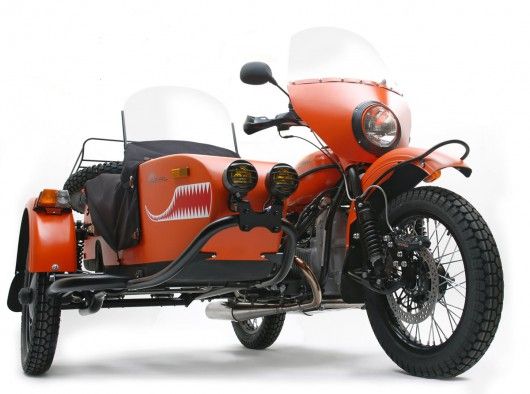
Back when my wife still liked my company, we used to hop in our car together and pick a random road and see where it went. You would think that down on the flatland this would be really silly, but turns out those roads were interesting. When we all get hooked on freeways, we miss the interesting stuff. And there's a lot of interesting stuff near pavement. You don't even need a Ural to get there. Your basic commuter hatchback will do just fine as long as it stays paved.

When you get into the mountains, the roads tend to go somewhere, and the pavement is more expensive to maintain so it had better be somewhere that matters, but sometimes those somewheres are ghost towns or old mines or maintained under a grandfather clause with the government so the importance has been lost. And sometimes that something is making a comeback. The gold mine at French Corral (about 10 miles as a crow flies) is reopening. Thanks to Quantitative Easing, a lot of people are buying Gold instead of government savings bonds (or Treasury Bills aka T-Bills) to hedge the value of their wealth. This is causing the price of Gold to rise, making the reopening of Gold mines a good investment. Gold mines are all over the Sierra foothills. Up and down Highway 49, a reasonably well paved road, you will see tailings and diggins and headframes and other signs of mining, still sitting there. When a mine goes bust, there is (usually) no money for environmental cleanup. So you get these piles of mine tailings and rusting stuff against a backdrop of big vistas. It's great for photography, especially folks like me who aren't that good at it. So bring your camera. Something with zoom and possibly filters for UV and a tripod. Also bring water and a tire repair kit and an air pump, just in case you get a flat. Some of these places are rural enough you might not have cellphone reception, or the cost of a rescue could end up rather pricey. So carry the essentials to get back to civilization again.

I always explore with sufficient critical supplies so if I get stuck, I won't just up and die there. It's also a good rule when traveling in the Sierras to carry winter weather gear. We have had snow on the 4th of July, and not small amounts of it. I'm talking blizzards. The Sierras are the poster child for severe weather. Most of those stories about being trapped in an unexpected blizzard originate from here. It makes them savage and beautiful mountains, and you end up loving them that much more for their dangers. Naturally, the parks in California are one of the big reasons to come here. You take your kids to see Yosemite and try to maintain your blase sense of cool while the Valley walls, a couple thousand feet over your head, lean over you. Don't bother. Gape like everyone else. It's allowed. It's practically mandatory.

I think, if I'd had kids of my own, I'd take them exploring like my Dad took me and my brother out and about. There's so many interesting places to see, and it helps you comprehend the scale of the world, even from this tiny corner of it, that your horizons are not so limited to the Bay Area, for example, or the Island of Manhattan. It's a big world. Much of it can be safely explored, again and again. I find the best way to explore is go very slowly so you can really take it all in. And go offseason so that's not getting you in someone's way. This is another good reason for bicycle tourism, scooters, and motorcycles. You naturally tend to go slower on those, so you see more. If only motorcycles didn't unconsciously steer wherever you're looking, so looking off to the side steers you off to the side. That can be bad.
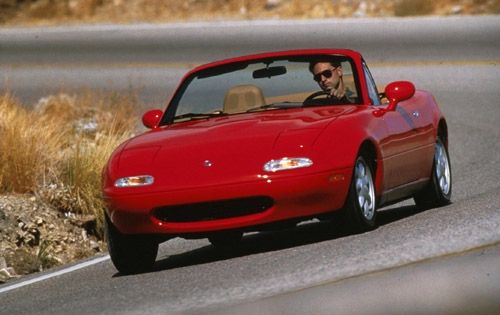
Mazda Miata, 1993.

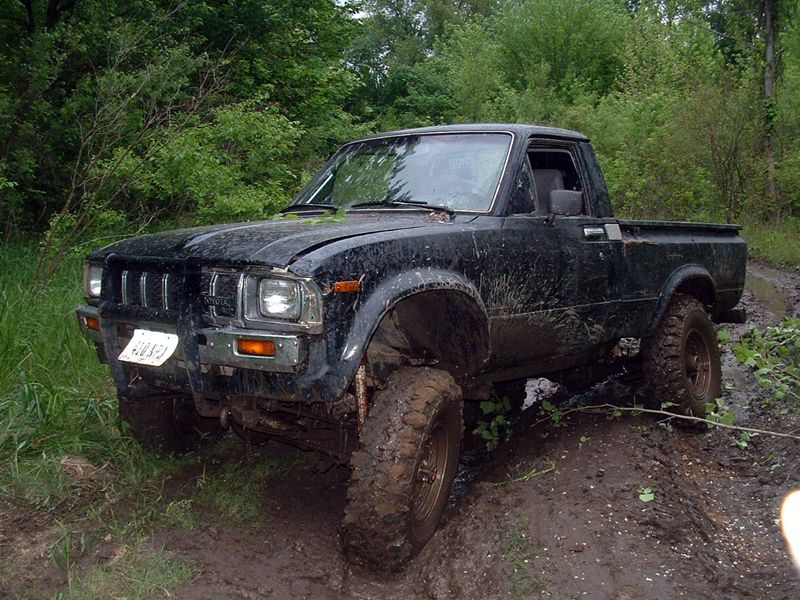
For those who'd rather avoid the pitfalls of two wheels on unfamiliar roads, I suggest the Mazda Miata convertible for paved roads. They're like the English roadster convertible, except they always start so they don't strand you on the boonies. There's a point where discomfort becomes ridiculous and that's a defining characteristic of classic English cars: bad electrics makes them unreliable. And ragtops are unfun above 55 mph. Stick to the secondary roads without stoplights and you'll have a better trip than super-slab (freeway) offers. The right hat and possibly goggles to cut down on wind drying out your eyes is probably a good idea too. They currently make them in several styles, including the old fashioned ones and newer ones which will fit over glasses if you wear them. If you're going to risk gravel or unpaved roads then give serious thought to carrying a winch, shovel, and a hand saw with you, just in case your 4WD/AWD gets stuck.
Even THIS can get stuck. 

That said I've found some great paved roads in California you might not have been on yet. First, there's Highway 49. It runs on the west side of the foothills from down near Fresno all the way up to Downieville, where it finally climbs the Sierras and goes over the pass down to meet up with highway 85 near Sierraville. This is an important place because the meadows there are one the East side of the Sierras but drain WEST through them thanks to the Mohawk Fault, which marks the northern end of the Sierras and the Southern end of the Cascades. The river and the fault are both OLDER than the Sierras. The mountains came later. I really wish my Geology teachers had spent some time on that subject because its important and geologists get asked about it all the time. We should not ignore important things just because they are close by. It is one of my primary disagreements with my professors over my education. Highway 49 is twisty and full of history and there are mines every few miles, though you have to pay attention to see them. Highway 49 is named for the year that the Gold Rush got underway, though it took most of a year for the discovery of Gold in California to reach the East coast and get them headed here in droves. Droves are like herds of cattle, btw. Drover used to be a job title. The 49ers are all the fools who came to California to strike it rich. Most died of exposure, some unlucky souls died from drug overdoses or food poisoning. It was very popular to sell "patent medicines" containing opium to the miners for gold nuggets or powder. Most of the really cool bird species and wild game like Tule Elk were killed to feed the miners. They're still trying to recover, even now.

Another good road is highway 89. 89 runs down the East side of the Sierra, up the West shore of Lake Tahoe all the way to highway 70 at Grayeagle, then splits off from 70 in the Feather River Canyon heading north to Shasta. It's twisty and high elevation and covers some of the prettiest territory in the Eastern Sierra. It is worth driving on, and not just the part that runs on the West shore of Lake Tahoe. Continue North past Truckee and its fantastic high Sierra wilderness, the northern branch of the Little Truckee River, old historic barns, and some good fishing too. Most of the side roads off of 89 are genuinely interesting, but they're best seen in October when the aspens turn golden. This is where your digital camera will thank you for lens filters and a tripod because you want those colors bright and beautiful. Shoot in RAW format, not JPEG. You'll thank me later.

Highway 70 is one of those nifty secret roads all the locals know but you don't. Highway 70 follows the Feather River from Sacramento, where it starts, to Highway 395 on the Nevada border. The Feather River Canyon is one of those driver roads that are whispered about by people with really good sports cars, Porsches and Audis, cars that handle well. Anywhere you stop on the way is likely to have trout, because its a primary trout fishing river in California. Its also the lowest pass through the Sierras so is often open when others are closed. It is heavily dammed and the power generated is used to pump water to Los Angeles, who owns the rights to a huge amount of the water and all the electricity generated. The railroad routes through there, as an alternate to Donner Pass, its high point being in Portola which has a nice railroad museum but used to be a very active repair yard, like Roseville. It is a fantastic road to drive if you have a convertible in the summer or a sunroof at least. The canyon is narrow and twisting so its challenging to corner it properly and the many bridges and dams make it that much more interesting. There are tunnels through the granite. At the bottom of the canyon is a Highway Patrol speed trap and a big lake called Oroville, which is the second largest in the state and supplies water for the Central Valley agriculture. At the top of the canyon there are alpine meadows that reach for miles and a town that looks so gingerbread you'd swear it was fake. A pity its been hit hard by poverty, thanks to Northern Pike (fish) in Lake Davis impacting the fishing tourism. If the Pike escape, they will kill everything downstream. They're vicious, like piranha, and invasive. Its a real environmental disaster.

Highway 70 makes a nice loop to highway 89, which you can follow through Lake Tahoe, then spend the night or drive on down highway 88 instead of 50, though 50 has its pretty parts too, and some nice hiking opportunities at Horsetail Falls in Desolation Wilderness. The downside to 50 is it turns into a boring commuter highway once you hit Placerville. I would say it is too wide and convenient to be fun.

I'm just including the Sierra highways here. There are lots of nifty side roads too. The Gold Lakes road that runs from 49 to 85 is fantastic, mainly because Sardine Lake and Gold Lake are both scenic and good trout fishing at the northernmost extent of the Sierras. It is glacially carved and very pretty, and the lakes are mostly cirque lakes with alpine meadows. They're rarely crowded and very pretty to visit for a picnic. Take your camera, for sure. From Highway 70 there's a turnoff north where 89 continues towards Shasta and Lake Almanor which reaches North of the mountains and offers some interesting alpine meadows without all the crowds, very remote, very rural, mostly cattle and a few cabins. Fantastic and interesting places but probably cold as a freezer in wintertime.

Off of Hwy 89 just north of Truckee and I-80 there are a series of lakes and reservoirs (man-made lakes) with barely maintained forest service roads connecting them. People live out there too. Its basically high desert conditions: sagebrush, bunch grass, pine trees, and they get snow. If you have a rally car or 4WD, this is the place for you. Its also good for mountain biking and off-road or Enduro motorcycles. Interesting roads to drive on, curious sights to see, and good fishing, all within short distance of help when you break your axle or rip open your transfer case on that rock you though you could clear but didn't quite after all. You know, THAT rock. It looks so much smaller when you get out and stare at the thing that wrecked your off-roading vehicle. Isn't that something? Later, after the tow truck comes, you can have a nice sandwich or BBQ in Truckee, which has found itself with higher end clientele than they used to so they serve better food now. Its only 90 minutes east of Sacramento, after all, and another 70 minutes to Reno, give or take. That's not that long for good fresh fish when trucks are passing every few minutes anyway, and the main line for the East-West of Southern Pacific is going through town. There are upsides to being on the transportation route. Even if every third truck says Walmart on the side. There's a major warehouse for them in Reno.

For Eastern Sierra views of essential mind blowing purity, there is Highway 395. Start in Reno and head South. It just gets prettier and prettier as you go South till you have lost enough elevation to reach the desert. The initial climb up to Carson City is dull and boring as you pass between the Silver mountains and Mount Rose. After that, it becomes amazing because there's enormous alpine meadows in Minden, then you curve down the Walker River gorge to Bridgeport, which is another alpine meadow. I'm big on Alpine Meadows because they are very special and somewhat rare.

On the way, be sure to take the June Lake Loop. June Lake was carved by glaciers and looks it. Its one of those secret places which has been developed in a good way, not offensively. You can camp or stay in a motel or a fancy hotel cabin, depending on your wealth. The food can be good or bad, depending. In the winter they have a ski resort. In the summer, they have really good trout fishing and better hiking up the sides of the U-shaped valley and up towards the glacier hidden in the shadow of the peaks. Its got great views, all the way up, but its high elevation so be in good shape, and mornings are COLD. Bring sunscreen and long sleeves.
June Lake, 1998. One of my favorite pictures ever. By Me.

Further south on 395, stop at Kehoe Hot Springs Road South of Bishop. The water in the creek under the high tension power lines is warm, suitable for bathing. It is a power plant, running on geothermal water from the cooling volcano nearby, technically still active. Bishop itself has Schatt's Bakery which is awesome. Buy the Sheepherder Bread, fresh. The Chili Cheese Bread is also tasty, but its a new kinda thing, only around for 15-20 years. The basic sheepherder bread is a variation on Basque Bread (the Basques have the OLDEST republic on earth, over 5000 years now, which is 3000 years longer than the Chinese had any government at all). The Basques don't allow their volatile women to vote, and half the world's more well known Explorers were Basque (technically Spaniards). There are more Basques in the Great Basin Desert and California than in their original homeland on the border of Spain and France, and their language, long thought to be an orphan is actually related to the original Bulgarian spoken from the Black Sea before it was salty, so make of that what you will. Anyway, their bread is really tasty. I recommend it. Back in the day, you could catch legal trout in the streams running through Bishop. The state doesn't really stock trout properly anymore. They do it on opening day so the fish don't get a chance to adapt to a lake or river before they're all caught. They really should do their stocking at least a month earlier. They'd taste better too.

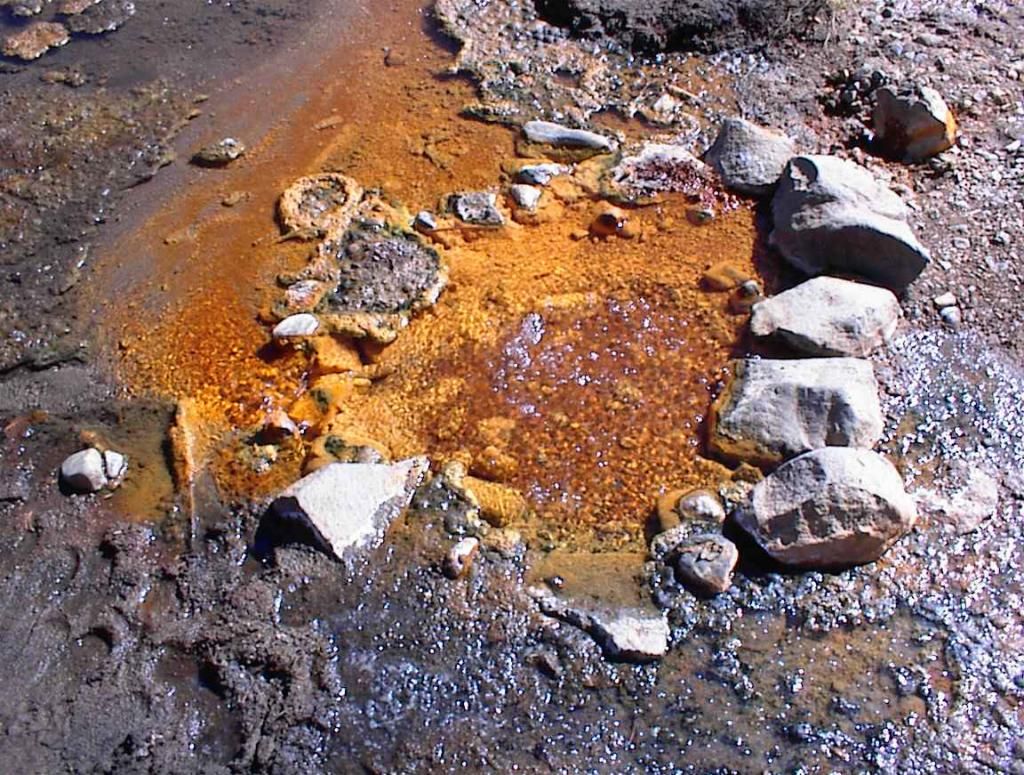
The views on Highway 395 are fantastic, almost unreal. Much of the road passes through incredible vistas with towering peaks on either side, lakes, alpine meadows. Really good stuff to see. Any visit to 395 is going to look surreal. Its really there. Don't take any sort of mind altering chemicals because you will doubt yourself for life when everyone agrees with you about what you saw. 395 looks fake it is so amazing. It's like Yosemite. 395 also offers a nice turnoff for Mammoth Lakes and Pinnacles Park. Go there. Its interesting in the summer because the Pinnacles and Devil's Post Pile are TECHNICALLY on the West side of the divide, but Mammoth (the town) is on the East Side, just a short distance from the Pacific Crest. In the summer, known locally as "August", you can take a tour van to the park at the bottom of the canyon or possibly your own car and then walk to Soda Springs, where CO2 bubbles out.

No matter how refreshing this water looks, drink no Sierra Water without boiling first. It is full of evil bugs that will make your intestines hate you for weeks or months. It is not fun. Buy the bottled stuff or fill from a fountain or tap. No rivers, no stream water. Just don't.

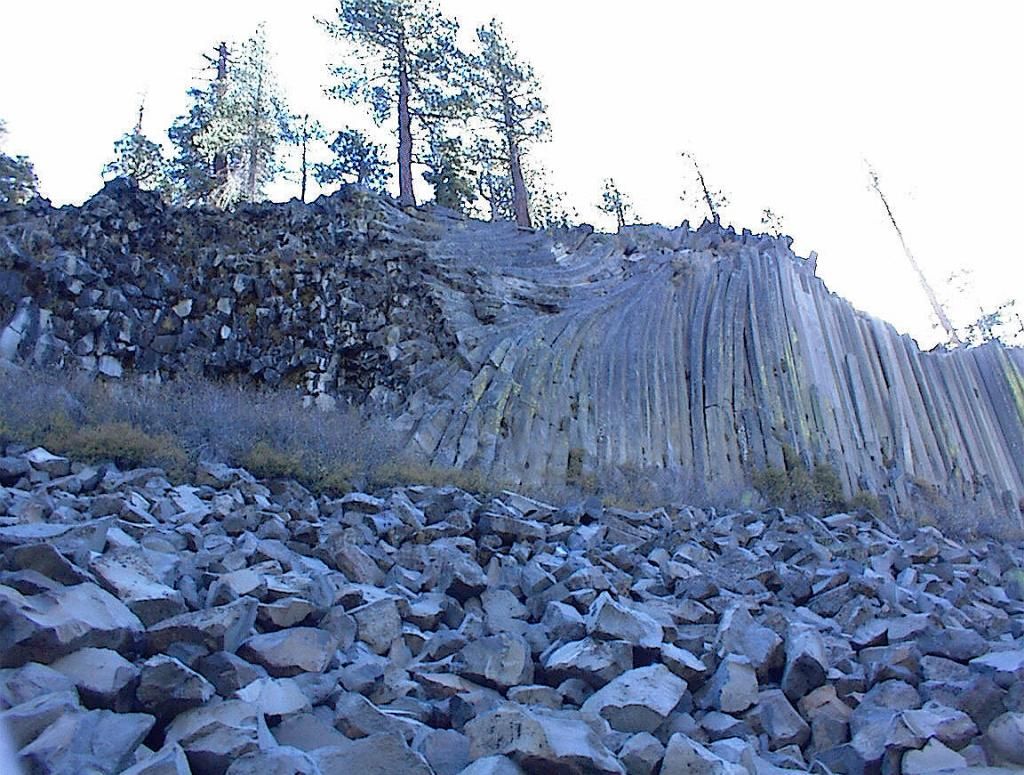
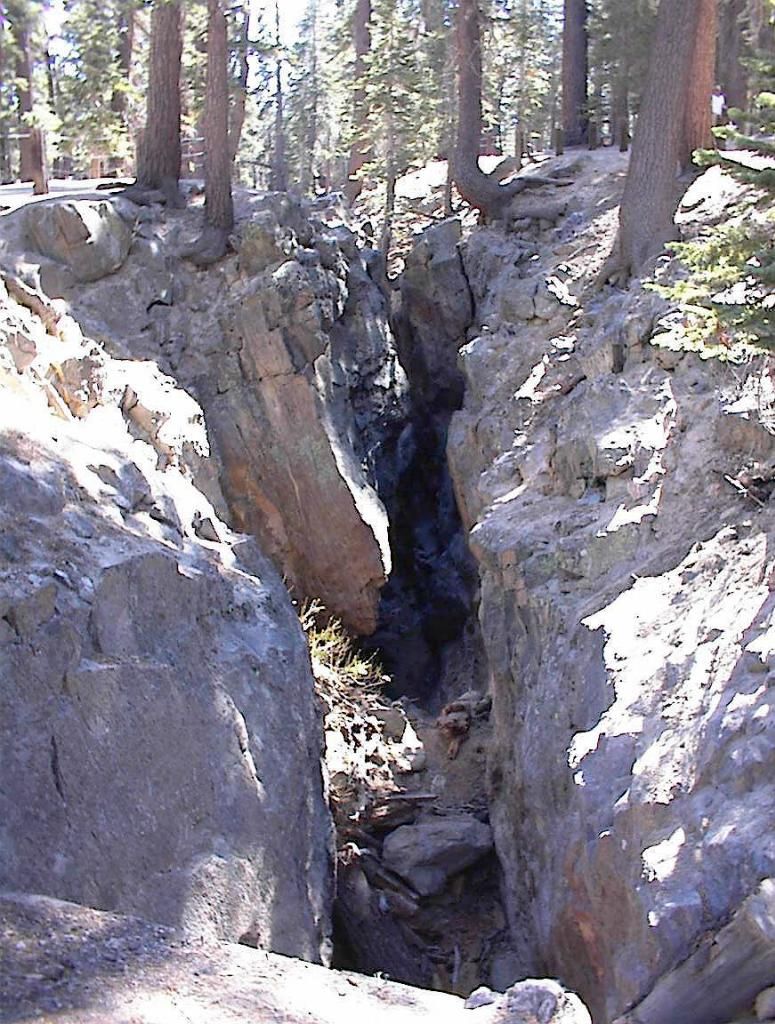
The Post Pile is a nice short hike and I thought it was well worth it. Its not magical but it is an interesting chunk of columnar basalt. You can hike around it and walk on the mix of hexagons and pentagons caused by the cooling lava. It is exposed because a glacier sheared it off. Very nifty geology. The big crack on the northern road out of town is pretty interesting too, caused by a major earthquake in the 1980's. Despite claims to the contrary, Long Valley Caldera is NOT going to explode. The magma source is cut off, and the activity moved north to Lassen etc. All the volcanos are in the Cascades. So yes, Mammoth is safe real estate to buy. It will not explode.
Yosemite has highway 120 run through it, and its a pretty road BUT they charge to use it now, around $20/car just to pass through which is a lot of money when you are only allowed to go 35 mph. It cuts down on crashes sure, but they include that speed limit 30 miles from the actual views worth seeing, and that gets OLD, really fast. If I were on a scooter, I'd be okay with that, but in a sports car, or even a passenger van, that's so BORING. Of course, once you hit the interesting bits it's great. The Valley isn't on Highway 120, you're only there for an intersection, then climbing back out of it again. In the summertime, this takes you past some interesting bits, including Tuolumne Meadows, which is really pretty and very high up, and a nice view of Half Dome on the way.
So real it looks fake. 

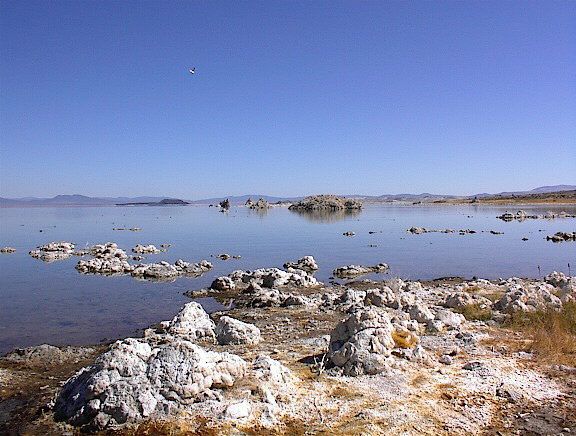
In the winter, 120 is closed, and being a non-cleared road winter lasts around 8-9 months a year. Keep that in mind. Tuolumne Meadows is very pretty, almost pristine example of a high alpine meadow. The grass is frost resistant and makes a nice broom or brush. I had one, made it myself for sweeping out our tent. I don't recommend camping there because the Black Bears are mean and will tear apart your car, which is easy for them. Cars are just aluminum foil as far as a bear is concerned. They're really strong. If you're there for the day, its fun and the far side goes down a beautiful mountain canyon which is terrifyingly steep and eventually lands at Lee Vining on 395 at Mono Lake. You can go North or South from there.

Oh, one other cool place on 395, north of Mono Lake before you reach Bridgeport. That's Bodie State Historical Park. Bodie was a silver mining boom town. The mine ran out of silver after decades of mining so people moved away, but nobody moved in so the houses were abandoned. As it is dry there, they are still, mostly, standing, complete with garbage around them. They were occupied long enough to have gas pumps in 1935 but eventually the last person moved out and the State of California got the place as a park. It is a monument to our boomtown economy, our continuous series of economic bubbles. If you want to see a classic ghost town, this is the place to go. Bring a camera and long sleeves. It is high elevation so walk slowly.

Finally, there is Westgaard Pass, which starts at the Junction next to Big Pine, CA, and leads East to both Deep Springs Valley (cool for geologists thanks to the Poleta folds and the Original Deposition Dolomite in the dry lake visible from them there are only 3 or 4 places on earth which have this) and the top of the White Mountains which contains the oldest known trees on earth, the Bristlecone Pine forest, which is at 11,000 feet. The trees there have evolved to being only partially alive at any one time, the rest of their wood dead and exposed to the elements. The dolomite rock is so poor in nutrients they can barely survive, but the perched aquifer supplies their water and the lower temps means they just trickle along. Its an amazing place, really. While part of the road is gravel, it doesn't matter because its East of the Sierra's Rain Shadow, so pretty dry most of the year. You can go there with any front wheel drive car just fine, though I recommend Fuel Injection because the air is so thin most struggle to run otherwise. Once you park, you need to walk slowly. It is COMMON for people to get out of their cars and actually FAINT from the thin atmosphere. You can DIE from altitude sickness. No really. Die. So be careful, move slowly, and recognize any potential problems before they drop you. I do not recommend long hikes at that altitude, which just gets you further from help when you faint. Take the pictures at the top of the mountain, absorb the experience. Then get down the mountain before you get sick.

These are nifty roads in the Sierras, both West and East sides. There are many more worth visiting, but I will let you explore them yourself. It's a BIG WORLD, and it is up to you what to see of it.

Sunday, December 2, 2012

Storm #3 Summary

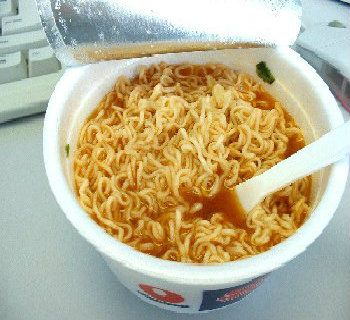
For those who care, we got 9.75 inches of rain here in the last five days. For scale, this is just 1.25 inch less than the average YEARLY rainfall in Los Angeles. We're used to 80 inches a year here, more or less, in the foothills of the Sierras. As I write, it is currently snowing up above Lake Tahoe so its probably been a good weekend for skiing after all. We're expecting sun, partly cloudy, tomorrow, then rain Tuesday and Wednesday, followed by sun again. We'll see. I'm going to do what I can about fallen leaves tomorrow. And my typing test so I can get a proper job, finally. We'll see. It is best not to get my hopes up. Apparently, the Fiscal Cliff is dumping 350,000 Californians off of Unemployment and into those minimum wage jobs I'm competing for. This will further decline wages and people will bid with their skillsets for anything to keep a roof over their heads and ramen in their bellies.
You Are Fighting for This!
Some say I shouldn't blame the guy in charge. Some say all Presidents have been pushing us towards inevitable poverty and death because Wealth concentrates in the Wise, whereas a Fool and his Money are Soon Parted. Fools can love their ramen, together. At least enough rain fell that we now have the water to boil to make ramen in the first place. So... yay?

Saturday, December 1, 2012

Carrying Stuff

It is a shame at the Jeep being produced by Chrysler Corporation is NOT the Jeep that people want. Its a heavy, safe, inefficient beast that isn't very good at offroading anymore, costs too much, and yet is still pretty poorly made. The old Jeep from WW2 is what people want. It has 4 wheels, goes everywhere, not too fast, and is CHEAP. It's poorly made and will require rivets, bolt tightening, and probably some additional welding to hold it together long enough for it to rust apart instead of shake apart, but with incomes falling and roads getting worse all the time, especially in the boonies where pavement is a luxury few will be able to afford much longer, Jeeps need to be reintroduced at their original cheap price. Maybe even cheaper.

Imagine if you could buy a Jeep, road legal, max speed 45 mph (no overdrive), no lift kit, just a jeep made to go offroad with those chunky tires and the fold down windshield and the ragtop with a rollbar. Imagine that for $12K or so, out the door. Comes in Yellow, Orange, Red, Tan, OD Green and Grey. That's enough colors for a Jeep. The original was powered by a 30 HP engine, I think. It wasn't fast. It did go everywhere a double track led. Its big advantage over motorcycles and tuktuks is that it has 4 wheels so it won't flip over just because you had to slam on the brakes. It will also carry passengers and stuff. You can't leave stuff in the car parked somewhere because its an open top so stealing it out is as simple as reaching in. Old Jeeps didn't have door locks, even with the hard tops. It was truly bare bones.

A week ago I saw a curious sight. A little hatchback towing a really short trailer behind it. Front wheel drive cars don't often tow trailers since they can wreck the car if they weigh too much. Use a short trailer, carry light stuff, you can get away with it. Small teardrop trailers are small and light, made to be towed behind a family sedan. They only sleep one person, and the kitchen is operated from outside so not fun in the rain, but they'll fit behind a very small vehicle and go all sorts of remote places since they are so very light weight. Again, weight matters. I can see an obvious market for these things. For everyone who bought a commuter vehicle but needs to carry stuff, rarely, and hates renting a trailer, there you go. Get one of those.

If you have a scooter or motorcycle, and need to carry stuff sometimes, bigger than you can fit in a saddlebag or rear box/milk crate, then you'll want something like a sidecar. The Russian response to the Jeep was the Ural sidecar motorcycle, based on the captured WW2 German motorcycle sidecars contracted to BMW. The horizontally opposed twins have plenty of torque and while the engine sticks out either side, they're pretty easy to work on. As I am apparently a quarter German myself, from back before the Revolutionary War (1750-ish), I suppose part of me is curious about them. And their Russian spawn, which are made to be easier to repair. Sidecar bikes are really for taking friends along, though they hold a lot of groceries or camping gear, from what I understand. Then again, so does a Jeep or Toyota 4x4.

It is also possible to tow a trailer behind a motorbike or scooter, btw. You have to position the hitch near the axle or frame such that the pull is down low, and you need it to have pretty neutral weight on that hitch or it becomes very dangerous, very quickly. Usually, if you need to carry lots of stuff, don't use a bike. Its kind of: DUH! Use a truck or a trailer or a hatchback. That's what they're for. The sidecar thing is mostly to give a passenger a thrill or to carry camping gear because you don't like the modern Jeep and can't find an old one that still runs.

Your basic scooter has flat floorboards, where you can nestle a couple bags of groceries between your feet. Modern scooters usually have foldout hooks for this purpose. A scooter was ALWAYS meant to be practical, even the most vintage ones. They were designed right after the war, when fuel was being used to clean up the bomb damage and rebuild Europe. I can't say I blame them. This is the same time period that the Fiat 500 (500cc engine!) came about, with its fabric roof and body made of sheet metal so thin you could dent it by squeezing too hard. The Citroen 2CV aka Deux Chevaux aka two horses aka the reason we call bad cars Lemons, because Citroen means Lemon was just as bad, if not worse. If you didn't buy the convertible, all you got was a couple flaps on the sides which popped open or shut when you didn't want them to. The windows couldn't roll down because the door mechanism was in the way. The 2CV is kinda like a VW bug without the convenience or power or reliability or working door locks. I suppose you could think of it as a Jeep with a roof? Its kinda like that.
Like a VW Beetle without the reliability, comfort, or power. 

Old people have a tendency to romanticize the discomforts our youth, so old people buy the new Mini or the new Beetle or the new Fiat 500 and overlook the rough bits which made them a tad uncomfortable back in the day, the whole reason they were cheap enough for us to own when we were kids. Grownups were buying Cadillac El Dorados or a nice Mercedes back then. When I was a kid, old BMWs were cheap, so I got one for my second car after my VW folded up like tinfoil around the bumper of the Honda that took no damage itself. That tells you something, right there.

Discomfort is adventure. How can the Youth of today find adventure is the worst they deal with is a car that smells like stale cigarette smoke on seats that have signs of cigarette burns and a little mildew? Its gross, but its not adventure. In a world of instant gratification and secondhand luxuries, where's the challenge that strengthens the spirit, tempering them into indomitable will? Oh, there's ME. I'm their challenge. I'm what makes them strong. My sharp tongue, my invective, my being right too much of the time. That's what they face. Me. My prior coworkers would likely second that.

What am I going to do? I'm going to keep running my Honda Accord till it doesn't work anymore, then fix it again. It gets 32 mpg on the highway. I just put gas in it for the first time since I moved here two months ago. Half the tank, shifting it left or right in the driveway. Oh well. It doesn't matter that a scooter gets 70-120 mpg because I have nowhere to go and no money to pay for one anyway and I need a motorcycle license in the first place. Someday I'll get one of those. I plan for it to be my primary dry-weather commuter because I want to continue my life of short-commutes and stay up here where people are pretty nice and I'm not being shot at. That's always something to favor in a lifestyle, unless you're a soldier or a cop or something. I'm not, never will be.
150ccs. Is this so much to ask?

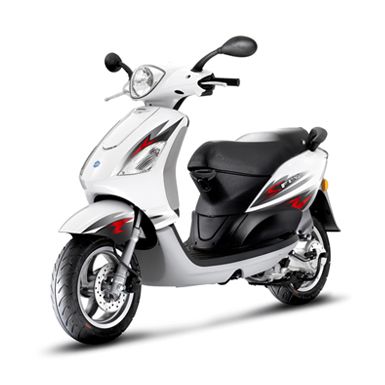
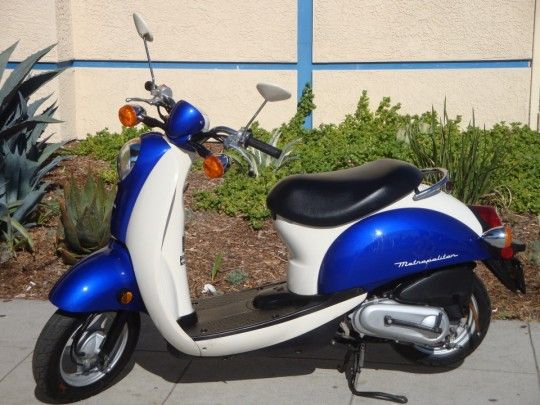
I want a little vintage Vespa equivalent, probably that scooter pictured above that's a little bit expensive but the right size and power and good brakes. I care about those things. A pity that Honda doesn't make a 108cc version of its Metro. That's a cute one, just too small an engine. With the better engine, it would pull a hill.
Vintage looks, with fuel injection.

Fuel injection is so important. Without fuel injection, a scooter is $1K cheaper. With, it starts up and runs immediately. No waiting 5 minutes for the engine to smooth out. Normalement, you need 5 minutes to put on your jacket, then your helmet, then your gloves, then throw your leg over and take it off the stand and look both ways at traffic, tabun. So that works out to the five minutes. With EFI you can do all that before hitting the starter. The smaller the engine, the faster it heats up. So in a really small 150cc engine, you're pretty much at breakeven point for EFI or no-EFI, so without you'd save money. The small difference is EFI also gives you better power so that $1K might be worth it. Or maybe just buy a used Ninja 250 and stop pretending. The Ninja is a not a tool to carry groceries though. Its built for riding, not carrying groceries home from the store. It isn't designed for practical urban and suburban living. The scooter above is all about the practicality of a Vintage scooter. Look at that flat floorboard. There's hooks waiting to fold out an grab your plastic or recycled grocery bags, so you can get your hummus, loaf of artisan sourdough french bread, and a 6 pack of microbrew home. Actually that sounds really good.